


You may also like
-
Primi giorni d'autunno a Urayasu Poster
Kawase Hasui · 1931 · Poster tranquillo sul lungomare con cielo crepuscolare e riflessi calmi
Poster da €9 · Incorniciato da €16
Prezzo di listino Da €6,00Prezzo di listino -
Ukiyo-e Tramonto al porto Poster
Kawase Hasui · 1935 · Stampa d'arte di porto al tramonto con sagome scure e cielo luminoso
Poster da €9 · Incorniciato da €16
Prezzo di listino Da €6,00Prezzo di listino -
Mare mattutino a Bikuni nello Shiribeshi Poster
Kawase Hasui · 1933 · Serena stampa d'arte shin hanga con barche da pesca su mare blu e foschia
Poster da €9 · Incorniciato da €16
Prezzo di listino Da €6,00Prezzo di listino -
Alba sul Lago Yamanaka Poster
Kawase Hasui · 1931 · Serena stampa di Monte Fuji all'alba con riflessi sul lago in toni freddi
Poster da €9 · Incorniciato da €16
Prezzo di listino Da €6,00Prezzo di listino


-

"Very nice Posters. The quality is amazing and we received it very quickly !"
-

"A shop to visit absolutely. Huge selection of posters. We spent more than an hour there !"
-

"Perfect to find gift. Price are very good. An they can frame and pack it on site"


L'artista
Kawase Hasui (1883–1957) è stato una figura centrale del movimento shin hanga, che ha rivitalizzato la tradizione della xilografia giapponese per un pubblico moderno. Collaborando con incisori e stampatori di grande maestria, Hasui ha dato nuova vitalità al paesaggio giapponese all'inizio del XX secolo, fondendo tecniche tradizionali con sensibilità contemporanee.
Formatosi in un periodo di grande sperimentazione, l'artista sviluppò una poetica personale che privilegia atmosfere quiete, luci morbide e una composizione attenta alla profondità prospettica. Le sue stampe raccolgono l'attenzione per i dettagli paesaggistici e per i mutamenti stagionali, diventando nel tempo oggetti ricercati da collezionisti e studiosi d'arte giapponese.
Per altre opere dell'artista, visita la nostra collezione Kawase Hasui.
L'opera
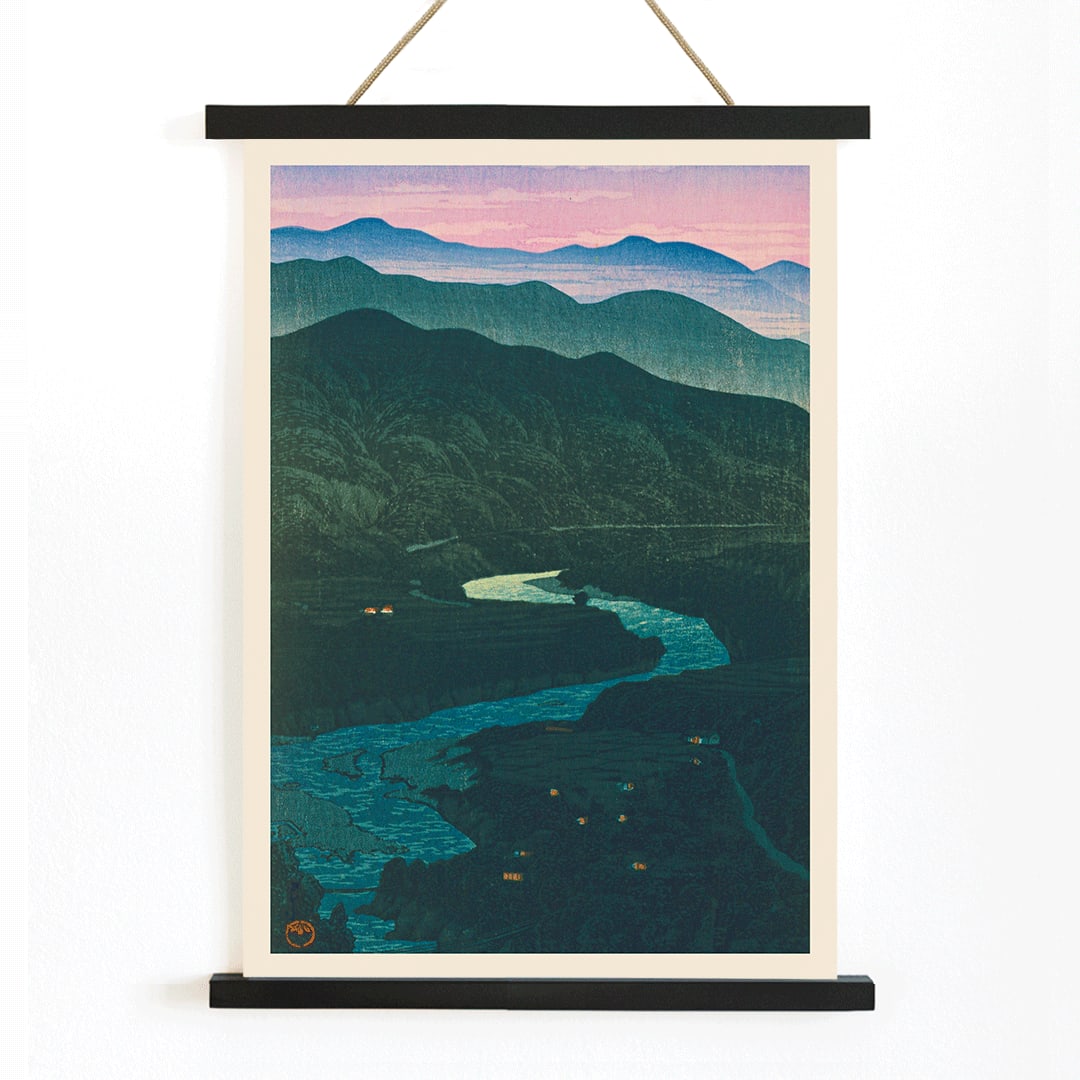
Passo Ecchu Umidani, realizzato nel 1923, riflette l'interesse di Hasui per la bellezza tranquilla delle zone rurali del Giappone. La stampa nasce in un periodo di rinnovato interesse per le tecniche xilografiche tradizionali, quando artisti e editori lavoravano per preservare e reinterpretare i paesaggi nipponici per un pubblico sia nazionale sia internazionale.
Qui Hasui non si limita a rappresentare un luogo geografico: costruisce un'esperienza visiva che riproduce la sensazione del viaggio attraverso passi montani, le variazioni di luce e il silenzio della natura. L'opera invita lo spettatore a una contemplazione lenta, suggerendo il passaggio del tempo e la continuità tra ambiente naturale e memoria collettiva.
Stile e caratteristiche
La composizione conduce lo sguardo lungo un sentiero tortuoso che svanisce in lontananza, incorniciato da creste blu a strati e colline dolcemente modellate. La padronanza del mezzo xilografico emerge nei contorni netti e nelle sottili sfumature cromatiche, firma della tecnica bokashi impiegata dall'artista.
La scena, dominata da fresche tonalità di blu e verde, è ravvivata da delicati accenti di rosa e viola nel cielo e nelle ombre, creando un'atmosfera meditativa e pacata. L'equilibrio tra resa dettagliata e resa atmosferica conferisce alla stampa un fascino insieme preciso e onirico, facendo di questa opera un esempio significativo della riscoperta del paesaggio nella stampa giapponese del XX secolo. Scopri anche opere blu con atmosfere affini.
Nell'arredamento d'interni
Questa stampa paesaggistica vintage valorizza gli spazi dove si desidera calma e ampiezza, come soggiorni, camere da letto o ingressi. La tavolozza fredda si abbina perfettamente a stili minimal, Japandi e scandinavo, e può ammorbidire interni più eclettici se accostata a materiali naturali quali legno, lino e ceramica.
Per armonizzare l'ambiente, considera accenti in ardesia, pino o tonalità lillà smorzate, oppure lascia che la stampa crei un contrasto fresco su pareti dai colori caldi. Si integra inoltre con una selezione curata di decorazione murale paesaggistica ed è ideale per un angolo lettura rilassante o un ufficio domestico raccolto