


You may also like
-
Dracula Poster
Artista sconosciuto · 1931 · Drammatico poster horror con sagoma di vampiro incappucciato che si staglia contro una luminosa luna piena
Poster da €9 · Incorniciato da €16
Prezzo di listino Da €6,00Prezzo di listino -
La vendetta di Tarzan Poster
Artista sconosciuto · 1920 · Classico poster d'avventura nella giungla con Tarzan che lotta con un leone
Poster da €9 · Incorniciato da €16
Prezzo di listino Da €6,00Prezzo di listino -
Una figlia del destino Poster
Eric Rohman · 1928 · Poster cinematografico Art Deco con donna composta in abito giallo radioso
Poster da €9 · Incorniciato da €16
Prezzo di listino Da €6,00Prezzo di listino -
King Kong Poster
Boye · 1933 · Drammatico poster King Kong con occhi rossi penetranti e protagonista in rosso vivo
Poster da €9 · Incorniciato da €16
Prezzo di listino Da €6,00Prezzo di listino


-

'Poster davvero belli. La qualità è fantastica e li abbiamo ricevuti molto in fretta !'
-

'Un posto da non perdere. Tantissimi poster tra cui scegliere. Siamo rimasti lì più di un'ora!'
-

'Perfetto per fare un regalo. I prezzi sono ottimi. Possono anche incorniciarlo e impacchettarlo sul posto.'


L'artista
H.C. Miner fu una figura di riferimento nella litografia americana dei primi decenni del Novecento, un periodo in cui il poster era il principale mezzo di comunicazione di massa e spettacolo pubblico. Il suo studio era specializzato nella promozione teatrale e cinematografica, catturando l'eccitazione e il dramma degli eventi dal vivo e delle prime proiezioni cinematografiche. Miner contribuì a definire il linguaggio visivo con cui il pubblico urbano attendeva e viveva l'intrattenimento.
Attraverso i suoi poster, Miner fuse talento artistico e istinto commerciale, creando immagini capaci di colpire immediatamente l'occhio e rimanere impresse nella memoria collettiva. La sua eredità resiste nel mondo della grafica da collezione, dove i suoi progetti decisi sono ancora apprezzati dagli estimatori della cultura visiva vintage e della storia del cinema
L'opera
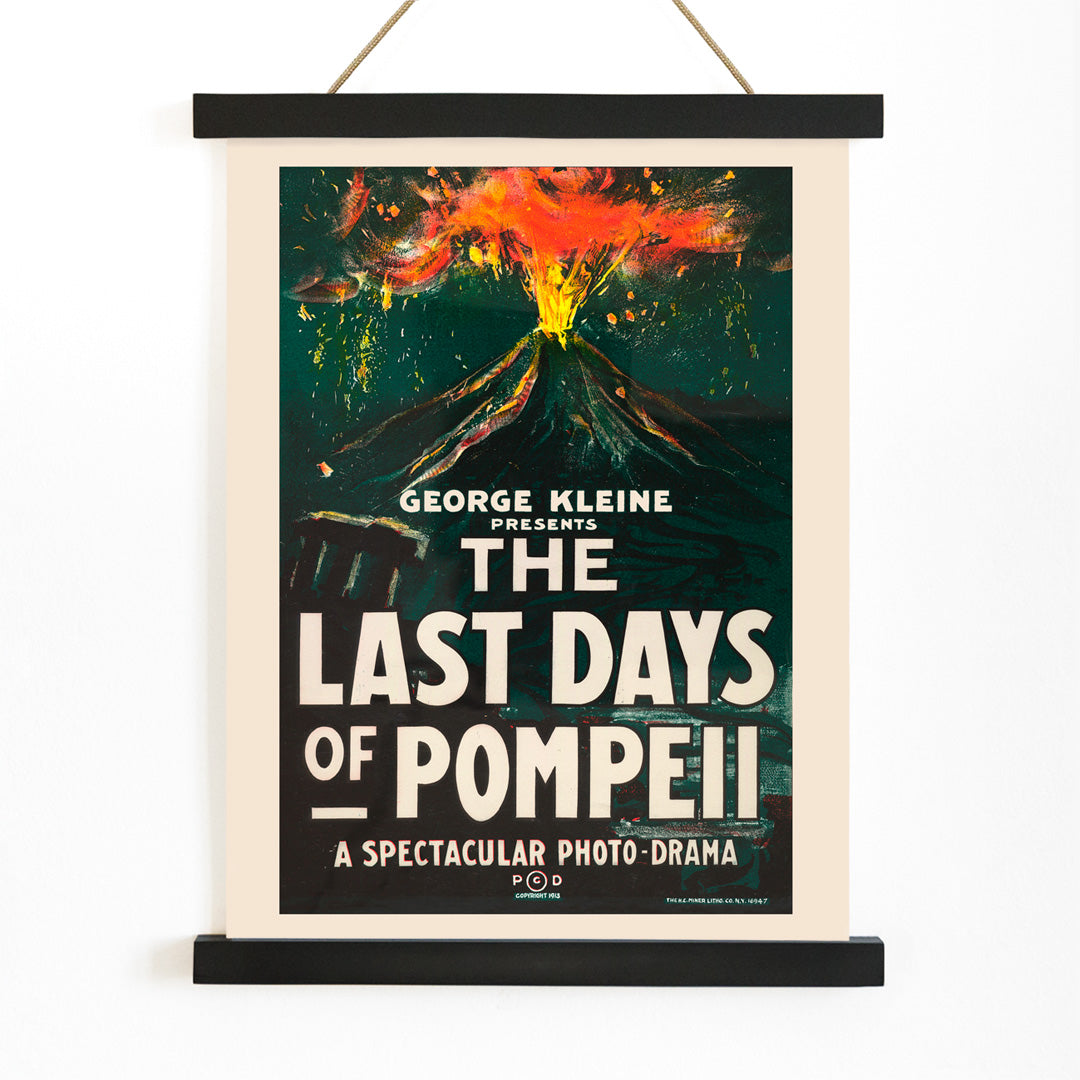
Il poster The Last Days of Pompeii fu realizzato nel 1913 per promuovere una spettacolare rievocazione cinematografica dell'eruzione del Vesuvio del 79 d.C. Questo episodio, profondamente radicato nell'immaginario occidentale, offriva a registi e promotori una narrazione ricca di spettacolo, lezioni morali e fascino storico. Il manifesto è pensato per attrarre il pubblico con la promessa di un disastro emozionante e della grandezza di Roma antica ricreata sullo schermo.
Come oggetto pubblicitario, riflette la moda dell'epoca per l'archeologia e il racconto epico, funzionando sia come strumento di promozione sia come testimonianza visiva della cultura cinematografica dei primi anni del secolo. Oggi è molto ricercato dai collezionisti di poster di film classici e di arte pubblicitaria vintage per la sua risonanza storica e l'impatto grafico
Stile e caratteristiche
La composizione mette al centro la forza esplosiva del vulcano, con fumo altissimo e toni fiammeggianti di arancione e giallo che dominano la parte superiore dell'immagine. In basso, figure in controluce e ruderi architettonici evocano il caos e l'urgenza del momento. La tipografia vintage e decisa del titolo cattura lo sguardo, ancorando la scena e amplificando la tensione drammatica.
La tavolozza accosta neri profondi e verdi a contrasti vividi di arancione e giallo, aumentando la sensazione di pericolo e movimento. Campi di colore piatti tipici della litografia e contorni netti garantiscono leggibilità da lontano, mentre l'atmosfera complessiva resta cinematografica e intensa, caratteristica dell'arte promozionale d'inizio Novecento
Nell'arredamento d'interni
Questo poster vintage diventa un punto focale di grande impatto in una sala multimediale, uno studio o un soggiorno in cui si desideri energia narrativa. Si abbina bene ad altri poster verticali, fotografie o opere classiche, per creare una parete a tema che bilanci storia e dinamismo grafico.
Per valorizzarlo, scegli tonalità carbone, oliva e neutri caldi, e richiama gli accenti arancio e giallo con dettagli in ottone o ambra. La sua presenza decisa si adatta a interni industriali, mid-century o eclettici, ed è particolarmente apprezzata dagli appassionati di cinema che cercano autenticità d'epoca nell'arredo