


You may also like
-
Pagnotte Poster
Artista sconosciuto · 1911 · Stampa vintage dettagliata di pagnotte assortite con accurate sfumature
Poster da €9 · Incorniciato da €16
Prezzo di listino Da €6,00Prezzo di listino -
Formaggi Poster
Beeton · 1923 · Stampa vintage dettagliata di formaggi con spicchi e forme etichettati in toni burrosi caldi
Poster da €9 · Incorniciato da €16
Prezzo di listino Da €6,00Prezzo di listino -
Cipolle Poster
Ernst Benary · 1876 · Stampa botanica dettagliata di cipolle con bulbi, radici e germogli verdi su beige
Poster da €9 · Incorniciato da €16
Prezzo di listino Da €6,00Prezzo di listino -
Cavoli Poster
Ernst Benary · 1876 · Nitida stampa botanica di cavoli verdi e viola con delicate ombreggiature naturaliste
Poster da €9 · Incorniciato da €16
Prezzo di listino Da €6,00Prezzo di listino


-

"Very nice Posters. The quality is amazing and we received it very quickly !"
-

"A shop to visit absolutely. Huge selection of posters. We spent more than an hour there !"
-

"Perfect to find gift. Price are very good. An they can frame and pack it on site"


L'artista
Creato da un artista anonimo, questo studio sul pane del 1911 nasce nella tradizione dell'illustrazione commerciale dei primi decenni del Novecento. In un'epoca in cui i materiali stampati di riferimento erano fondamentali per l'insegnamento e il commercio, disegnatori esperti realizzavano tavole destinate a uniformare la conoscenza sui beni di uso quotidiano. Questa stampa vintage sul pane rispecchia lo sforzo dell'epoca di documentare e condividere informazioni pratiche, destinate a botteghe, scuole e famiglie, rendendo il mondo dell'alimentazione più accessibile e organizzato
Al di là della sua funzione originale, l'opera offre oggi uno sguardo sulle abitudini quotidiane e sull'importanza del pane come alimento fondamentale e simbolo di sostentamento nella società di primo Novecento
L'opera
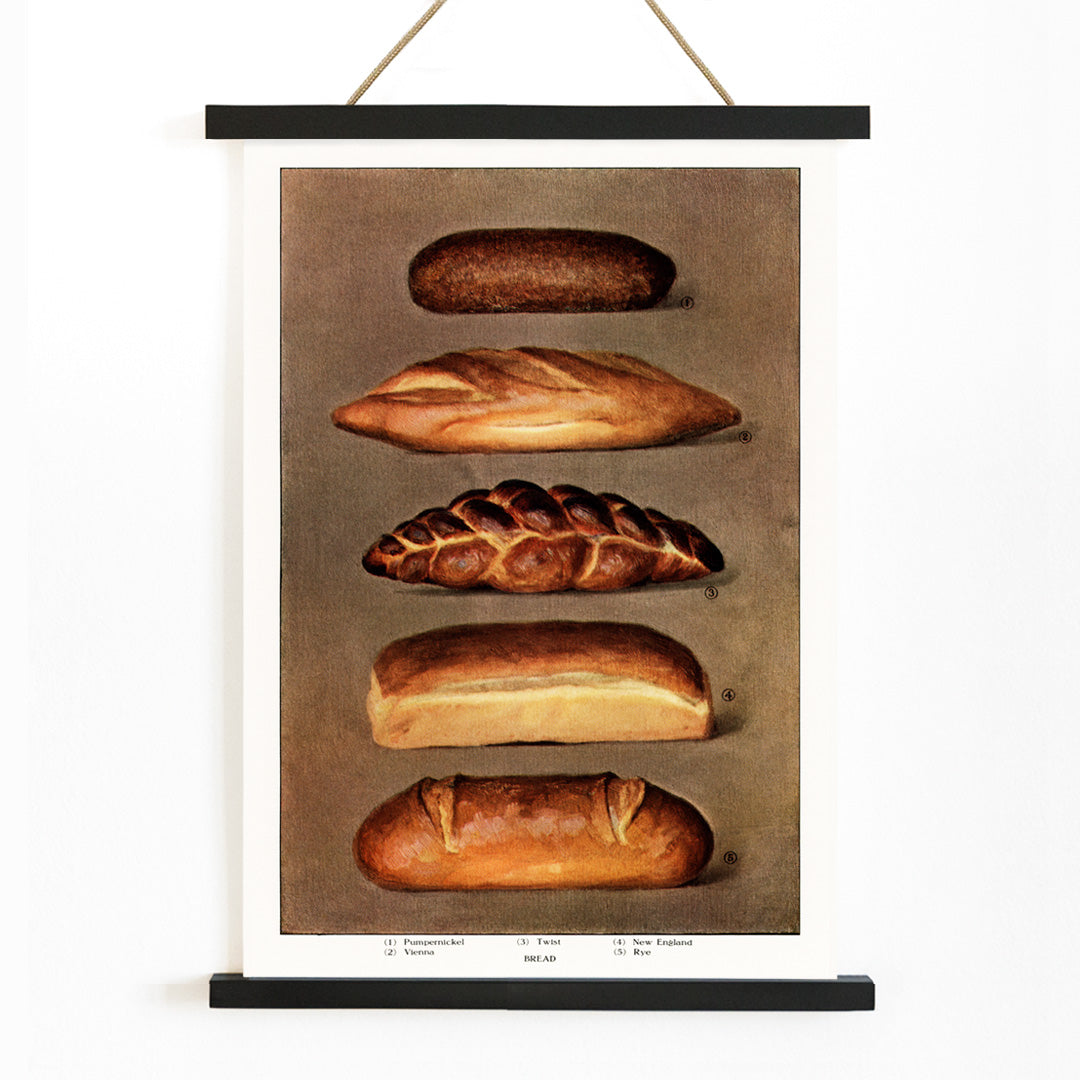
Pagnotte cotte 2 è esemplare della tendenza a catalogare visivamente i prodotti alimentari in un periodo di urbanizzazione crescente e cambiamento delle abitudini dei consumatori. Nel 1911 tavole illustrate come questa aiutavano a riconoscere i diversi tipi di pane, a individuare segni di qualità e a orientarsi nella varietà che si trovava nei mercati. L'immagine fungeva da strumento pratico dove le tradizioni locali di panificazione incontravano le esigenze della vita cittadina, guidando fornai e acquirenti nelle loro scelte
Oggi rimane un omaggio discreto all'arte della panificazione e ai rituali quotidiani che uniscono le comunità attraverso gusti e tradizioni condivise
Stile e caratteristiche
La stampa mostra varie pagnotte, ciascuna isolata per mettere in evidenza la forma individuale. L'autore impiega un chiaroscuro sottile per suggerire il volume e la trama delle croste, privilegiando chiarezza e precisione rispetto a effetti drammatici. La tavolozza predilige toni caldi di marrone e beige, che richiamano il colore del pane tostato e della carta invecchiata, rafforzando il carattere vintage del pezzo
La composizione è ordinata e pacata, con un'attenzione alla leggibilità e a una nostalgia gentile, qualità che rendono questa stampa adatta a interni a tema culinario o a collezioni di illustrazione alimentare
Nell'arredamento d'interni
Questa stampa vintage è particolarmente indicata per pareti di cucine, angoli colazione o sale da pranzo, soprattutto in ambienti con materiali naturali come legno, pietra o lino. I suoi colori sobri si armonizzano con mobili color crema, accenti terracotta o legni scuri, conferendo calore e autenticità sia agli interni classici sia a quelli rustici moderni. Per ispirazione, consulta le nostre raccolte decorazione per cucina e stampe tono beige
Valorizza inoltre l'atmosfera di caffè, panetterie o studi domestici che desiderano un punto focale ispirato al cibo, senza appesantire lo spazio