




-

"Very nice Posters. The quality is amazing and we received it very quickly !"
-

"A shop to visit absolutely. Huge selection of posters. We spent more than an hour there !"
-

"Perfect to find gift. Price are very good. An they can frame and pack it on site"


About the Artist
Karl Blossfeldt was a German photographer and educator whose close-up plant studies helped shape the field of modern botanical photography. Working in Berlin in the early twentieth century, Blossfeldt taught at the School of the Museum of Decorative Arts, where he encouraged students to look to nature for inspiration in design and architecture.
His groundbreaking book Urformen der Kunst, published in 1928, brought his work to international attention and influenced generations of artists and designers. Blossfeldt's photographs are celebrated for their ability to reveal the underlying structures and patterns found in plants, bridging the worlds of science, art, and education.
The Artwork
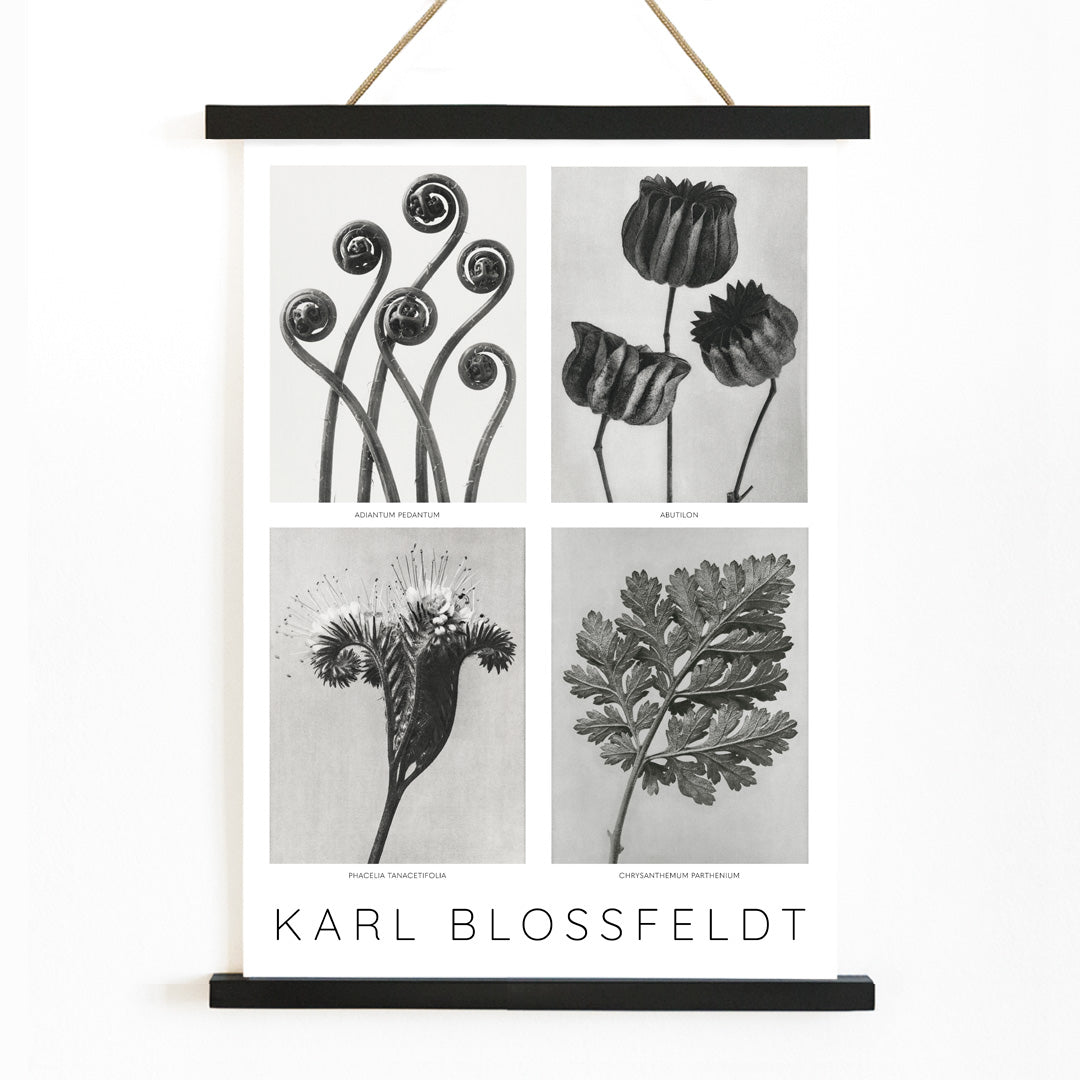
Created during a period when the boundaries between art, craft, and scientific observation were being redefined, this 1928 photograph reflects Blossfeldt's belief that nature's forms could serve as models for modern design. Rather than simply documenting plants, he sought to highlight their inherent geometry and order, offering a new way to appreciate botanical subjects.
This image stands as both a vintage print and a historical artifact, embodying the spirit of early modernism and the search for universal principles in natural forms. It appeals to collectors interested in the intersection of photography and botanical art, as well as those drawn to the roots of modernist aesthetics.
Style & Characteristics
The photograph features a single plant specimen, isolated against a neutral background, emphasizing its sculptural qualities. Blossfeldt's use of sharp focus and a full range of black, white, and grey tones brings out the intricate textures and repeating patterns of the plant, inviting close examination.
The mood is contemplative and precise, with a quiet elegance that reflects the modernist emphasis on clarity and form. The absence of color directs attention to the plant's structure, making this print a striking example of black and white botanical photography.
In Interior Design
This print lends a sense of calm and order to interiors, making it well suited for living rooms, offices, bedrooms, or creative studios. Its minimalist aesthetic pairs beautifully with pale woods, white walls, and matte black accents, or can provide a serene focal point within a more eclectic gallery arrangement.
For a harmonious display, consider grouping it with other black and white prints or curated botanical artworks. Its understated style complements both contemporary and classic interiors, offering timeless appeal for a range of spaces.