




-

"Very nice Posters. The quality is amazing and we received it very quickly !"
-

"A shop to visit absolutely. Huge selection of posters. We spent more than an hour there !"
-

"Perfect to find gift. Price are very good. An they can frame and pack it on site"


About the Artist
Tsuchiya Koitsu was a prominent figure in Japan's shin hanga movement, celebrated for his evocative night scenes that capture atmosphere and mood. Active from the 1920s to 1940s, Koitsu revitalized traditional ukiyo-e woodblock techniques by introducing modern lighting effects and a cinematic sense of place.
His depictions of Tokyo's temples and cityscapes helped shape the era of collectible Japanese landscape prints, bridging the gap between craft heritage and the evolving urban environment. You can explore more influential printmakers in our famous artists collection.
The Artwork
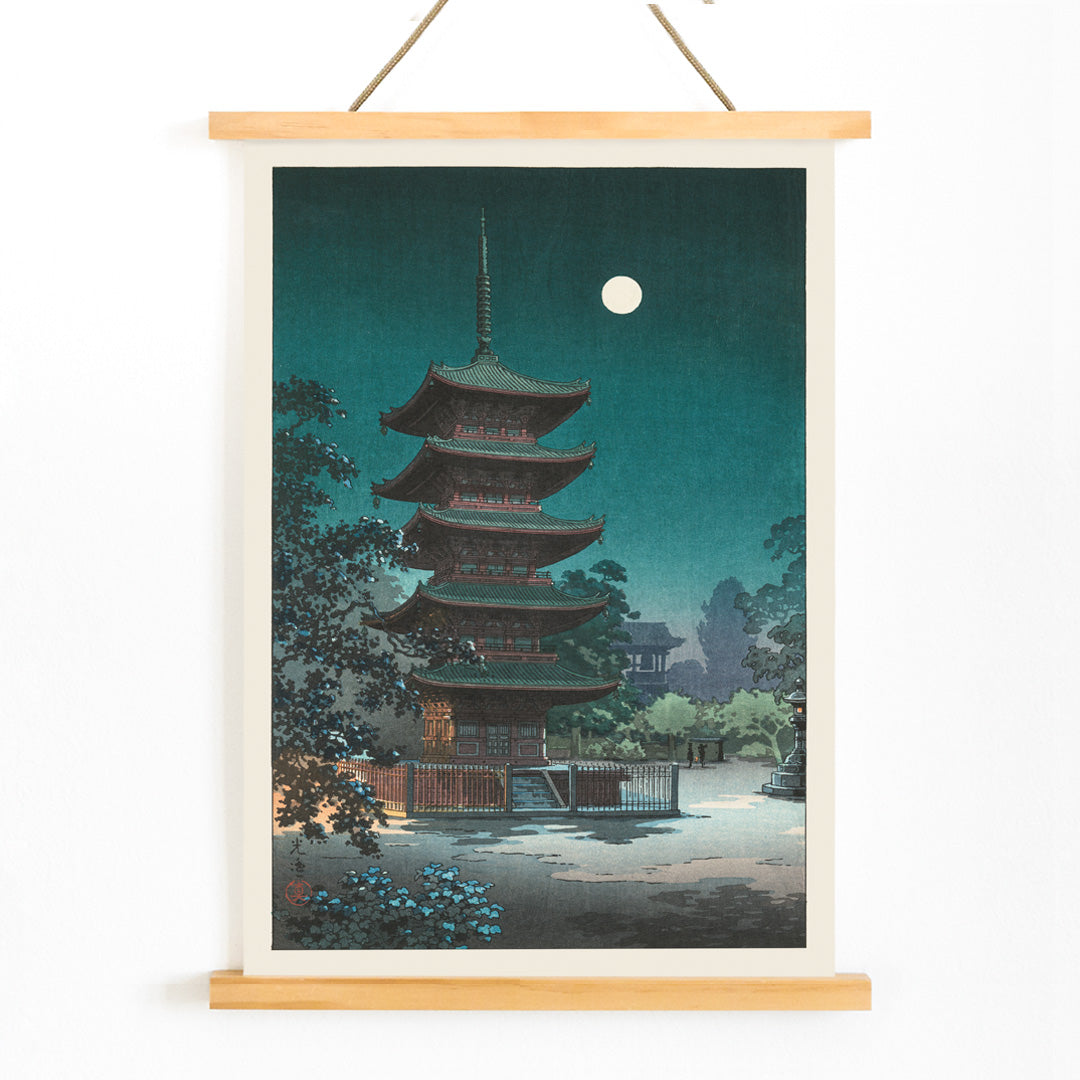
Asakusa Kinryuzan Temple stands as one of Tokyo's most revered spiritual sites, and in 1938, Koitsu chose it as a subject during a time of rapid change in Japan. The artwork reflects a longing for continuity and tradition, offering viewers a sense of stability through the familiar temple setting.
This vintage print was created as a visual keepsake for those drawn to the quiet rituals and evening tranquility of the city. Such works served as cherished reminders of place and memory, resonating with collectors seeking a connection to Japanese heritage.
Style & Characteristics
The composition features a luminous moonlit sky above the temple, with strong silhouettes of rooftops and trees framing the scene. Subtle lantern light glows along the path, while small figures add a gentle sense of movement and scale. Koitsu employs a restrained palette of deep blues, blue-greens, and soft greys, emphasizing the calm of night.
Gradual tonal transitions evoke the cool night air, and precise outlines define the architecture—a hallmark of shin hanga style. For more serene palettes, see our blue wall art collection and grey toned prints.
In Interior Design
This Japanese art print brings a sense of calm and understated elegance to living rooms, bedrooms, or entryways, especially where depth and tranquility are desired. It pairs beautifully with Japandi, minimalist, or mid-century interiors, and complements natural wood, black, and linen accents.
Display it above a console, near bookshelves, or as part of a serene gallery wall alongside other oriental artworks. The cool night hues harmonize with slate, sage, and off-white, making it a timeless choice among vintage Japanese posters for modern spaces.