


You may also like
-
Viola Poster
Wassily Kandinsky · 1923 · Stampa d'arte geometrica con forme viola, blu e gialle su fondo chiaro
Poster da €9 · Incorniciato da €16
Prezzo di listino Da €6,00Prezzo di listino -
Kleine Welten IV Poster
Wassily Kandinsky · 1922 · Stampa d'arte astratta di cerchi e linee angolari con accenti vivaci di blu giallo e verde
Poster da €9 · Incorniciato da €16
Prezzo di listino Da €6,00Prezzo di listino -
Curva libera fino al punto Poster
Wassily Kandinsky · 1925 · Poster astratto monocromatico di curve e forme geometriche con punto focale misurato
Poster da €9 · Incorniciato da €16
Prezzo di listino Da €6,00Prezzo di listino -
Kleine Welten II Poster
Wassily Kandinsky · 1922 · Ritmica stampa d'arte geometrica con cerchi fluttuanti, linee nette e campo nero intenso
Poster da €9 · Incorniciato da €16
Prezzo di listino Da €6,00Prezzo di listino


-

"Very nice Posters. The quality is amazing and we received it very quickly !"
-

"A shop to visit absolutely. Huge selection of posters. We spent more than an hour there !"
-

"Perfect to find gift. Price are very good. An they can frame and pack it on site"


L'artista
Wassily Kandinsky è stato una figura pionieristica dell'astrazione moderna, la cui ricerca sul colore, la forma e la composizione ha contribuito a definire il linguaggio visivo del primo Novecento. Le sue teorie stabilivano un legame profondo tra pittura e musica, valorizzando la risonanza emotiva degli elementi astratti rispetto alla rappresentazione figurativa.
Nel 1932 Kandinsky si trovava in Germania e insegnava al Bauhaus, un contesto che favorì l'elaborazione di un linguaggio geometrico più analitico. Questo periodo sintetizza la sua fase espressiva precedente con un approccio più misurato e progettuale, mostrando una visione matura e coerente dell'arte astratta. Per gli estimatori di stampe di Wassily Kandinsky l'opera rivela la continuità delle sue ricerche formali e percettive.
L'opera
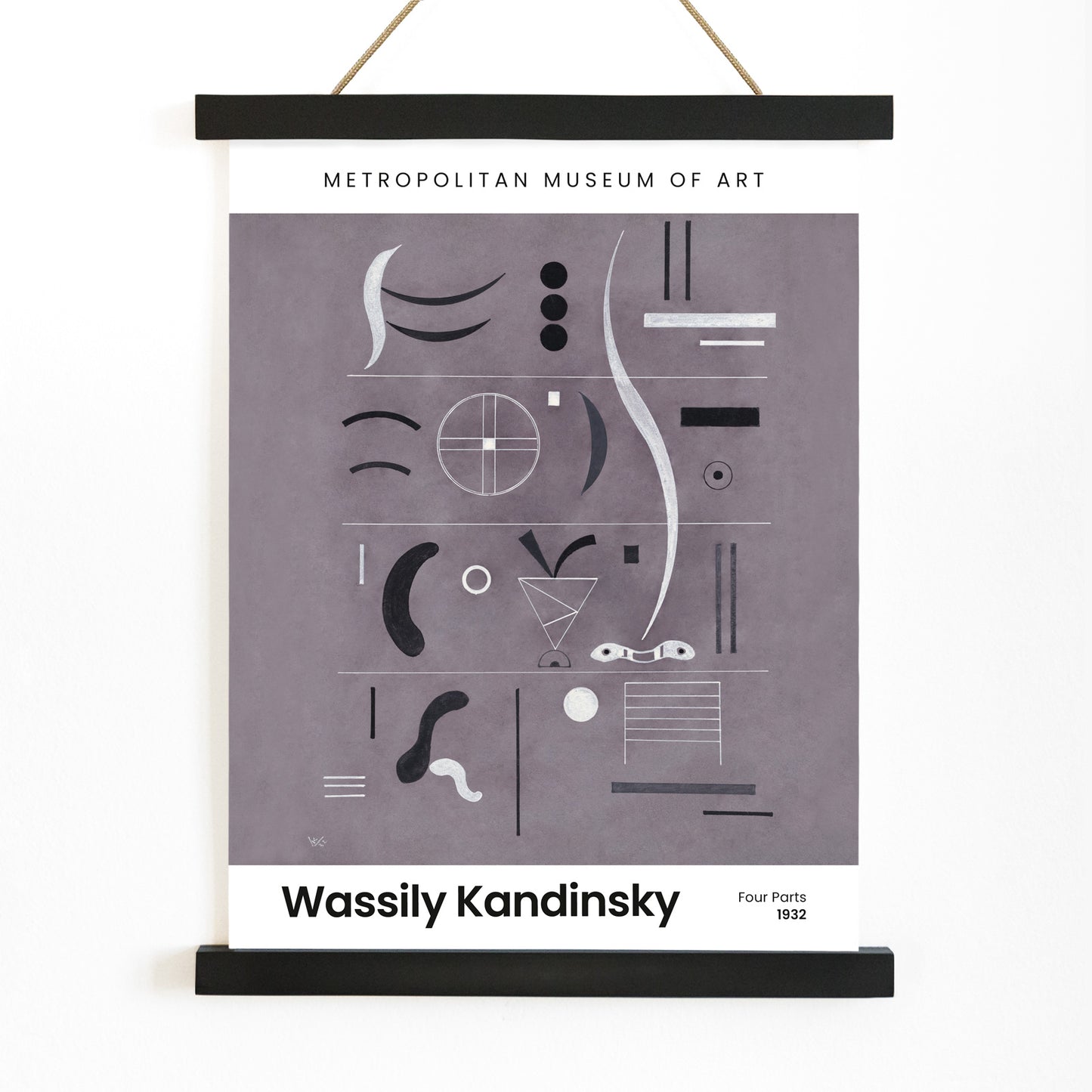
Realizzata nel 1932, Quattro Parti riflette la fascinazione di Kandinsky per struttura e armonia. Il titolo suggerisce un'analogia musicale: ogni sezione funziona come un movimento di una suite, distinto ma in relazione con gli altri. Piuttosto che rappresentare oggetti riconoscibili, la composizione esplora l'interazione tra elementi visivi separati, invitando lo spettatore a percepire l'astrazione come un equilibrio dinamico tra unità e varietà.
Quest'opera incarna lo spirito del Bauhaus, privilegiando chiarezza, ordine e il potenziale espressivo della forma pura. Rimane una dimostrazione della convinzione di Kandinsky che l'arte astratta possa suscitare emozioni complesse e stimolare l'intelletto senza fare ricorso a narrazione o figurazione.
Stile e caratteristiche
La composizione si suddivide in quattro sezioni definite, ognuna caratterizzata da un ordine specifico di forme geometriche: archi, linee, cerchi e figure angolari disposte su uno sfondo chiaro e neutro. La tavolozza è contenuta, dominata da toni di nero e grigio morbido che accentuano l'impatto degli elementi grafici netti.
Si percepisce un'energia misurata: il posizionamento preciso delle forme crea un ritmo visivo e una tensione sottile. Come stampa d'arte astratta, l'opera premia l'osservazione ravvicinata, mostrando come minime variazioni di allineamento e proporzione generino movimento e equilibrio nel complesso.
Nell'arredamento d'interni
Questa stampa di Kandinsky si integra perfettamente in ambienti contemporanei, in particolare quelli ispirati al minimalismo o al Bauhaus. La composizione strutturata e la palette monocroma la rendono una scelta raffinata per soggiorni moderni, studi o uffici dove le linee pulite valorizzano la sua chiarezza visiva.
Abbinamenti con accenti nero opaco, legni naturali o superfici in pietra chiara esaltano il rigore geometrico dell'opera. Per una presentazione armoniosa, valuta le nostre cornici in finitura nera o naturale