


You may also like
-
Ragazzi che si bagnano Poster
Edvard Munch · 1896 · Sognante stampa d'arte marina con ragazzi che si bagnano in toni blu e verdi
Poster da €9 · Incorniciato da €16
Prezzo di listino Da €6,00Prezzo di listino -
Nudo astratto Poster
Auguste Rodin · 1875 · Intensa stampa d'arte astratta con contorni fluidi e accenti cromatici primari
Poster da €9 · Incorniciato da €16
Prezzo di listino Da €6,00Prezzo di listino -
Lyrisches Poster
Wassily Kandinsky · 1911 · Lirica stampa d'arte astratta con linee nere energiche e accenti vivaci di rosso, blu e giallo
Poster da €9 · Incorniciato da €16
Prezzo di listino Da €6,00Prezzo di listino -
Desire Poster
Mikuláš Galanda · 1927 · Poster modernista con profilo in ombra e labbra rosse vivide su sfondo beige
Poster da €9 · Incorniciato da €16
Prezzo di listino Da €6,00Prezzo di listino


-

"Very nice Posters. The quality is amazing and we received it very quickly !"
-

"A shop to visit absolutely. Huge selection of posters. We spent more than an hour there !"
-

"Perfect to find gift. Price are very good. An they can frame and pack it on site"


L'artista
Edvard Munch è stato un pittore e incisore norvegese la cui ricerca visiva tra simbolismo ed espressionismo ha contribuito a ridefinire la rappresentazione dell'interiorità umana. Attraverso opere che indagano desiderio, angoscia e le complesse relazioni tra le persone, Munch ha sviluppato un linguaggio visivo personale capace di rendere tangibili i moti psicologici del mondo moderno.
Le sue opere grafiche, tra litografie e xilografie, ebbero una particolare risonanza per la capacità di condensare emozioni intense in forme nette e riproducibili. Per approfondire altre opere di qualità museale, esplora le nostre collezioni artisti famosi e arte classica
L'opera
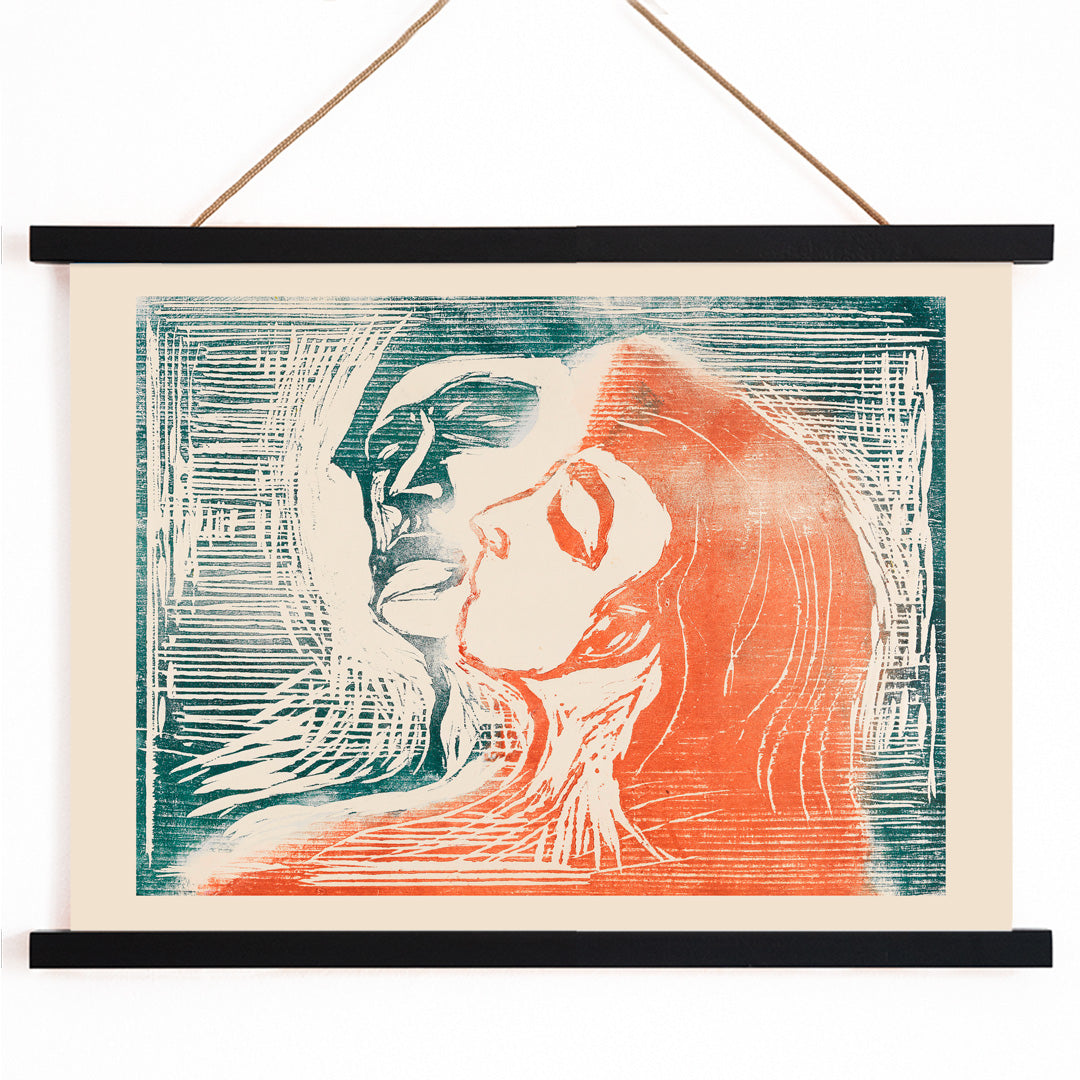
Realizzata nel 1905, Testa a testa esprime l'interesse continuo di Munch per le dinamiche emotive della relazione amorosa. L'opera nasce in un periodo in cui l'artista osservava l'amore come fonte insieme di conforto e di tensione, lontano da ogni idealizzazione. L'immagine non ritrae una coppia specifica ma funziona come meditazione universale sull'intimità e sulla vulnerabilità che essa comporta.
All'inizio del Novecento molti artisti, Munch incluso, tentarono di rappresentare forze invisibili come memoria, desiderio e conflitto psicologico: questo lavoro è esemplare di quel mutamento e invita lo spettatore a contemplare la natura spesso ambigua della vicinanza emotiva.
Stile e caratteristiche
La composizione è incentrata su due teste vicine, i cui lineamenti sono stilizzati per enfatizzare l'intensità dell'incontro. Munch utilizza contorni marcati e ampie campiture espressive tipiche della sua tecnica incisoria, creando un senso di immediatezza e impatto visivo.
La palette è dominata da arancione caldo e beige smorzato, con tocchi di verde che aggiungono profondità e una sottile tensione cromatica. L'atmosfera risulta insieme intima e inquietante, catturando la complessità emotiva caratteristica dell'espressionismo. Per armonie cromatiche simili, consulta le nostre collezioni arancione e verde
Nell'arredamento d'interni
Questo evocativo poster vintage porta risonanza emotiva in ambienti come camere da letto, angoli lettura o pareti-galleria del soggiorno. Il primo piano rende l'opera particolarmente efficace in spazi contenuti, dove la sua intensità favorisce un tono contemplativo.
Abbinalo a legni chiari, tessuti in lino e tonalità neutre per valorizzare l'opera, oppure enfatizza i verdi con piante e ceramiche. Si adatta a interni scandinavi moderni, minimalisti o eclettici, e trova una finitura elegante con passepartout semplici dalla nostra collezione di cornici