


You may also like
-
Back Muscles 2 Poster
Reijer Stolk · 1932 · Precise anatomical scientific print mapping back muscles in crisp black line on beige
Poster from €9 · Framed from €16
Regular price From €6,00Regular price -
Neck Muscles Poster
Reijer Stolk · 1930 · Refined neck anatomy scientific print with crisp black linework on beige paper
Poster from €9 · Framed from €16
Regular price From €6,00Regular price -
Leg Muscles Poster
Reijer Stolk · 1930 · Precise anatomical scientific print mapping leg musculature in crisp black line on beige
Poster from €9 · Framed from €16
Regular price From €6,00Regular price -
Head of Buddha Poster
Reijer Stolk · 1943 · Serene Buddha head art print with warm golden washes and soft graphite contours
Poster from €9 · Framed from €16
Regular price From €6,00Regular price


-

"Very nice Posters. The quality is amazing and we received it very quickly !"
-

"A shop to visit absolutely. Huge selection of posters. We spent more than an hour there !"
-

"Perfect to find gift. Price are very good. An they can frame and pack it on site"


About the Artist
Reijer Stolk was a Dutch artist and graphic designer active in the early twentieth century, known for his precise draftsmanship and innovative approach to visual culture. Working during a period of artistic experimentation and scientific curiosity, Stolk contributed to the intersection of art and education through his detailed illustrations and study plates.
This 1930 anatomical illustration reflects the era’s fascination with the human body as both a subject of scientific inquiry and artistic exploration. Stolk’s work provided valuable resources for students, artists, and educators, embodying the spirit of intellectual engagement that defined interwar Europe.
The Artwork
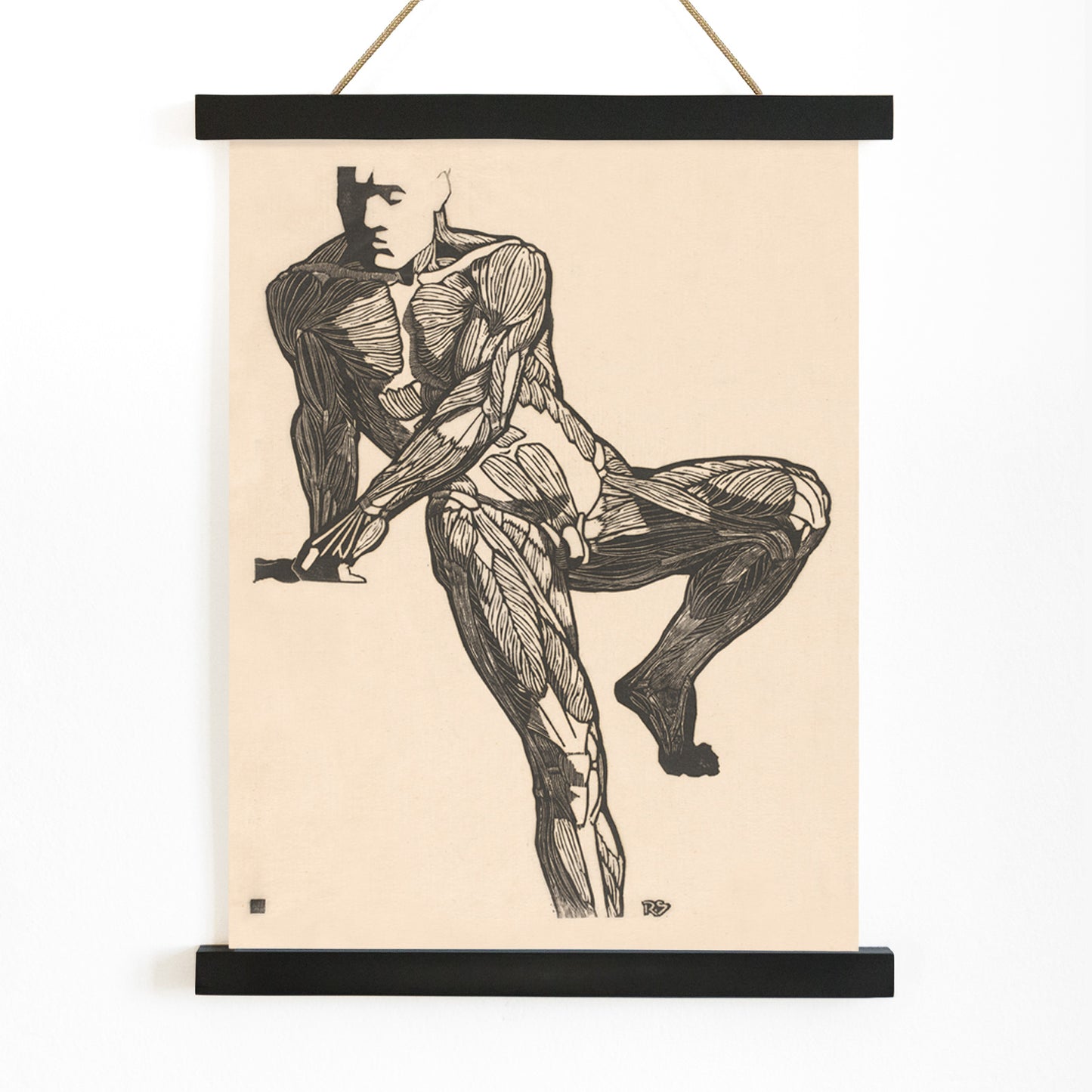
Chest Muscles was created as a reference image for anatomy study, intended to aid understanding of the torso’s musculature rather than to idealize the human form. During the interwar years, such prints were essential tools in academic settings, bridging the gap between scientific observation and artistic practice. This piece exemplifies the educational mission of anatomical art, offering a clear and accessible visual guide for those interested in the structure of the human body.
It stands alongside other science prints that celebrate the pursuit of knowledge and the beauty of precise observation.
Style & Characteristics
The composition centers on the chest, rendered with confident black contour lines and carefully delineated muscle groups. The restrained palette features deep black ink on a warm beige background, giving the print an archival, almost timeless quality. Generous negative space enhances clarity, making the anatomical forms easily readable from a distance.
The overall mood is analytical and calm, with a retro sensibility that aligns well with black and white prints and other minimalist, graphic wall art. The simplicity and precision of the design make it both visually striking and intellectually engaging.
In Interior Design
This anatomical print is well suited to a home office, creative studio, library, or hallway gallery wall, where it can serve as both an art piece and a conversation starter. It also complements gym or wellness spaces, adding a vintage yet thoughtful touch without appearing clinical.
The beige and black color scheme pairs beautifully with light woods, linen, and matte black frames for a modern look, or with brass and parchment tones for a classic interior. It coordinates effortlessly with beige posters and Bauhaus-inspired decor.