


You may also like
-

Red Leaves at Yunoyama Onsen Poster
Osaka and Nagoya Rail Agency · 1930 · Stylized autumn travel poster with scarlet maple leaves over a tranquil onsen valley
Poster from €9 · Framed from €16
-

Come to Tokyo Poster
Unknown artist · 1930 · Vibrant Tokyo travel poster with red lantern and cherry blossoms on deep blue
Poster from €9 · Framed from €16
-

Retreat of Spirits Poster
Japanese Railways · 1930 · Atmospheric Kirishima travel poster with lush greens and warm volcanic accents
Poster from €9 · Framed from €16
-

Fields of Color Poster
Japanese Railways · 1930 · Vibrant landscape poster with patchwork fields, distant hills, and a clear blue sky
Poster from €9 · Framed from €16


-

"Very nice Posters. The quality is amazing and we received it very quickly !"
-

"A shop to visit absolutely. Huge selection of posters. We spent more than an hour there !"
-

"Perfect to find gift. Price are very good. An they can frame and pack it on site"


About the Artist
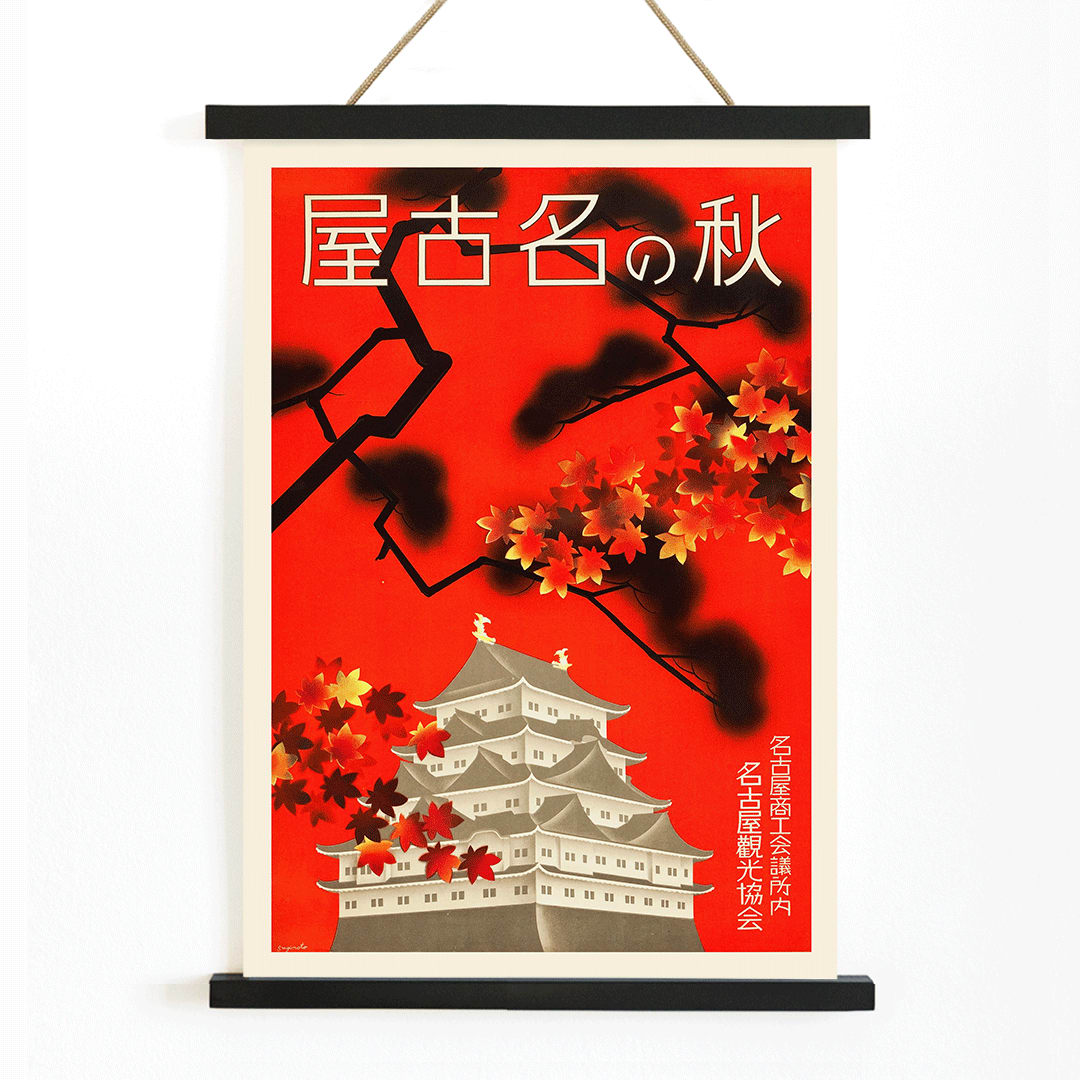
Produced by the Nagoya Tourism Bureau, this 1930 poster reflects a period when Japanese cities actively promoted themselves through striking graphic design and printed publicity. Municipal bureaus collaborated with commercial printers to create posters that would be displayed in train stations, hotels, and travel agencies, transforming local landmarks into visual invitations for travelers.
This approach was part of a broader movement in early twentieth-century Japan to modernize civic identity and encourage domestic tourism. Today, such works are valued as cultural documents that capture the intersection of tradition and modernity in Japanese visual culture.
The Artwork
This depiction of autumn in Nagoya places Nagoya Castle at the heart of the composition, a symbol deeply connected to the city’s samurai heritage and evolving urban identity. In the 1930s, images like this encouraged visitors to experience history as a living part of city life, blending educational and leisurely travel.
The autumnal setting is significant, as the appreciation of fall foliage is a cherished tradition in Japan. Here, the castle serves as a backdrop for seasonal contemplation, presenting Nagoya as a destination where heritage and natural beauty harmonize.
Style & Characteristics
The poster features Nagoya Castle as a stable focal point, with vibrant red and yellow foliage in the foreground creating depth and movement. The use of bold, simplified shapes and crisp outlines reflects the graphic sensibility of early twentieth-century travel advertising, designed for clarity and impact from a distance.
The color palette contrasts the warm hues of autumn leaves with the cooler grays and whites of the castle architecture, producing a serene and inviting atmosphere. This visual approach appeals to admirers of vintage travel posters and Japanese wall art seeking graphic elegance and historical resonance.
In Interior Design
This vintage poster brings a cultured, tranquil note to entryways, living rooms, or studies, especially in Japandi, mid-century modern, or minimalist interiors. Its harmonious colors and iconic imagery make it a strong anchor for a gallery wall featuring architecture or landscape themes.
Pair with warm wood accents, neutral textiles, and matte black or natural frames for a refined effect, or complement the autumn tones with nearby red accent prints. As a vintage Japanese travel poster, it introduces seasonal warmth and a sense of place to any setting.