


You may also like
-
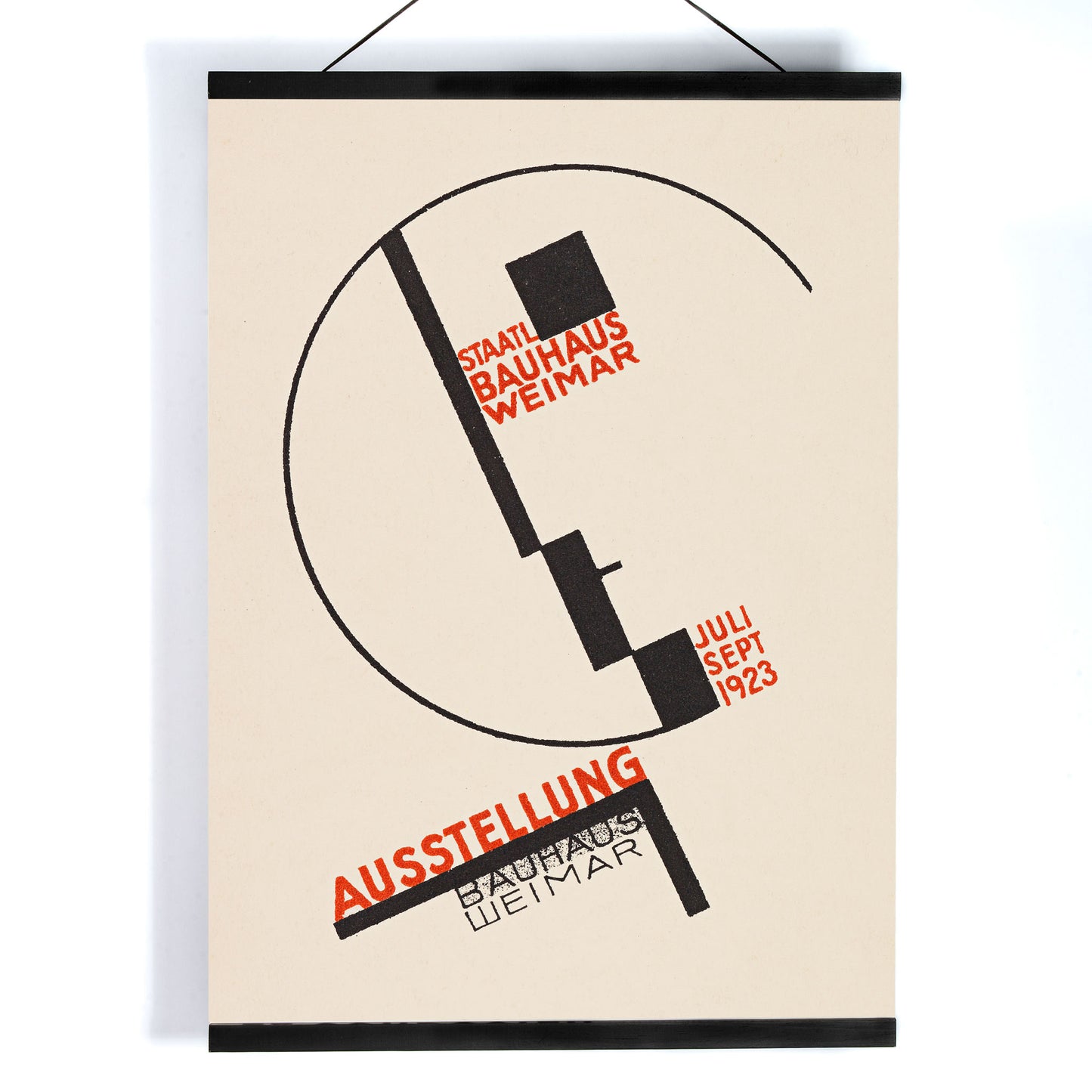
Bauhaus Ausstellung Poster
Unknown artist · 1923 · Bauhaus exhibition poster featuring bold black and white geometry and clean sans serif type
Poster from €9 · Framed from €16
Regular price From €6,00Regular price -
Bauhaus Poster 1 Poster
MORYARTY · 1923 · Geometric Bauhaus poster with layered shapes and bold modernist color contrasts
Poster from €9 · Framed from €16
Regular price From €6,00Regular price -
Bauhaus Poster 4 Poster
MORYARTY · 1923 · Geometric Bauhaus poster with orange and black forms on warm beige ground
Poster from €9 · Framed from €16
Regular price From €6,00Regular price -
Bauhaus Poster 3 Poster
MORYARTY · 1923 · Geometric Bauhaus poster with primary colors and crisp modernist balance
Poster from €9 · Framed from €16
Regular price From €6,00Regular price


-

"Very nice Posters. The quality is amazing and we received it very quickly !"
-

"A shop to visit absolutely. Huge selection of posters. We spent more than an hour there !"
-

"Perfect to find gift. Price are very good. An they can frame and pack it on site"


About the Artist
Dörte Helm helped shape the visual voice of the Bauhaus in Weimar, where graphic clarity carried as much weight as furniture or architecture. Trained in the school’s workshops, she moved between painting and textile design while contributing to the wider modernist project around the 1923 exhibition. Her name matters here because a Bauhaus poster by Helm shows how closely women artists participated in the movement’s public image, even when their roles were often overlooked in later histories. This vintage poster is a fine art print of that wider cultural shift.
The Artwork
Made for the Bauhaus exhibition in Weimar, this piece speaks to a school that needed to explain itself to the public. The poster had to do more than announce dates, because it also framed the event as a statement about modern life, teaching, and design. Its purpose was persuasion as much as information, turning an exhibition notice into a piece of advertising art. Seen today as a vintage print, it still carries the urgency of a moment when Bauhaus ideas were moving from the classroom into the street.
Style & Characteristics
A warm beige ground gives the poster its open field, then the black circle and angular shaft pull the eye into a tense, mechanical rhythm. Red lettering cuts across the surface in three bursts, one near the upper form, one beside the date, one over the slanted title at the bottom. The lettering leans, the forms cut hard, and the large arc keeps the eye moving around the page. As a Bauhaus art print, it shows how spare geometry and strong typographic contrast can make a vertical poster feel alert without crowding the surface.
In Interior Design
Place it in a hallway with pale walls and a dark frame, where the vertical poster can extend the space and meet the light at eye level. The red type gives a small shock of color against neutral paint, while the black shapes echo a console, lamp, or shelving detail nearby. In home decor, this Bauhaus wall art works especially well in a modern entryway that needs a point of focus without visual noise. For interior decoration, it brings the discipline of early modernism into a room that already values simple lines.