


You may also like
-
Caesalpinoid Poster
James Bolton · 1768 · Delicate natural history print with butterfly, beetles, and shells on cream
Poster from €9 · Framed from €16
Regular price From €6,00Regular price -
European robin Poster
James Bolton · 1768 · Delicate robin print perched among wild strawberry leaves and blossoms on clean paper
Poster from €9 · Framed from €16
Regular price From €6,00Regular price -
Kolibris Poster
Johann Friedrich Wilhelm Herbst · 1840 · Detailed hummingbird print with tropical blossoms, balancing scientific precision and romantic color
Poster from €9 · Framed from €16
Regular price From €6,00Regular price -
Douze contes Poster
José-Maria de Heredia · 1879 · Whimsical birds and butterflies poster framing a French tale title in lush foliage
Poster from €9 · Framed from €16
Regular price From €6,00Regular price


-

"Very nice Posters. The quality is amazing and we received it very quickly !"
-

"A shop to visit absolutely. Huge selection of posters. We spent more than an hour there !"
-

"Perfect to find gift. Price are very good. An they can frame and pack it on site"


About the Artist
James Bolton was an English naturalist and illustrator active during the Enlightenment, a period when scientific discovery and artistic skill often went hand in hand. His work contributed to the growing field of natural history, making rare and exotic species accessible to scholars and enthusiasts through detailed illustrations. Bolton's legacy lies in his ability to capture the diversity of the natural world with both accuracy and artistry, helping to document and share knowledge in an era before photography.
The Artwork
This 1768 illustration reflects the culture of collecting and classification that defined 18th-century natural history. The artwork was created for a time when naturalists assembled albums of specimens—birds, shells, plants, and insects—to study, compare, and discuss. Such images served both as scientific records and as objects of beauty, intended to inspire curiosity and conversation among collectors and scholars. Bolton's composition embodies the Enlightenment spirit of inquiry, blending observation with a sense of wonder at the natural world.
Style & Characteristics
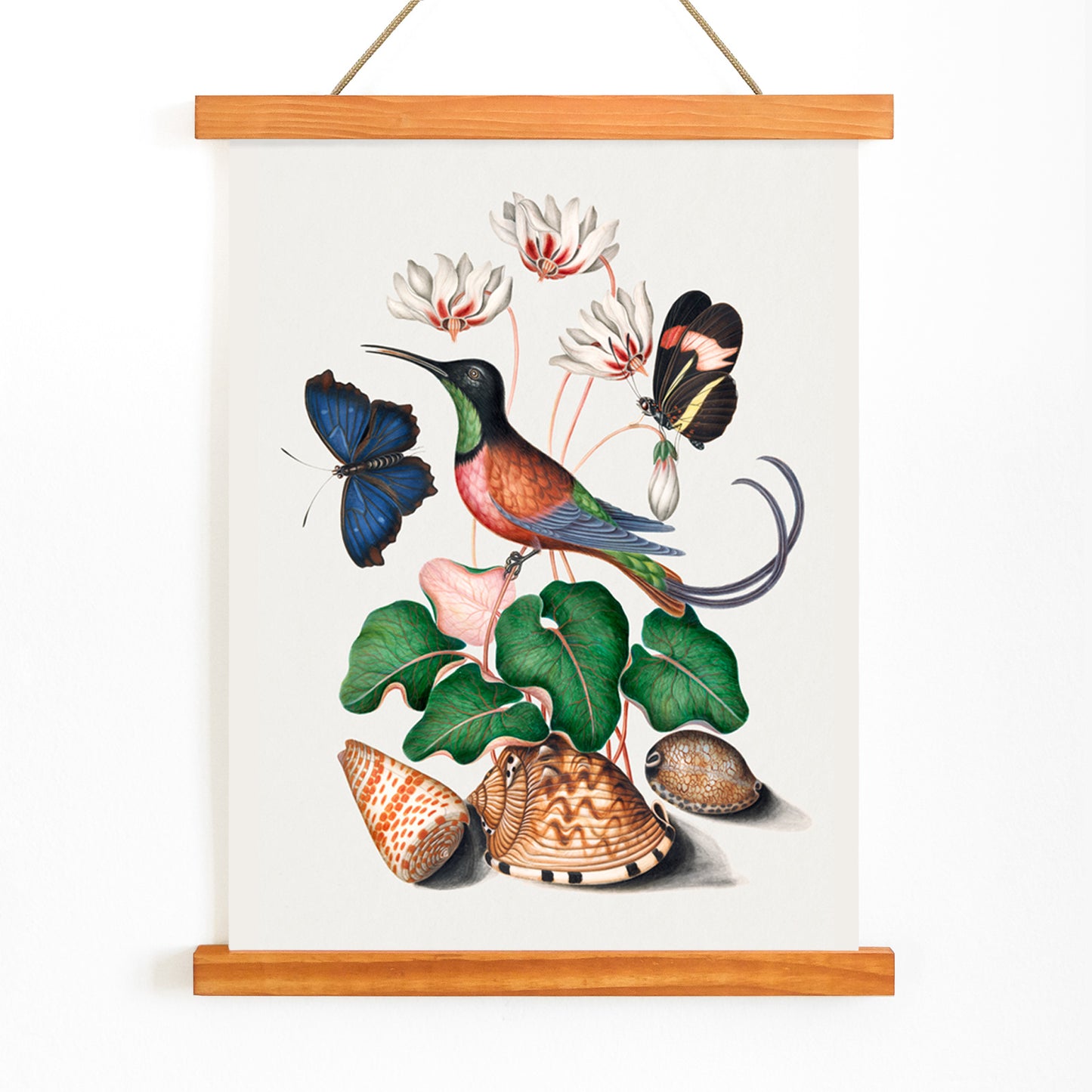
The print features a carefully arranged crimson topaz hummingbird, accompanied by shells, butterflies, and cyclamen flowers, each rendered with precise linework and subtle shading. The palette balances vivid reds, soft greens, and cool blues, set against a light background that highlights each specimen. The composition leaves ample negative space, allowing every detail to stand out clearly. This disciplined, attentive style is characteristic of 18th-century British natural history prints, combining scientific clarity with quiet elegance. Those interested in botanical wall art or animal art prints will appreciate the harmonious blend of detail and restraint.
In Interior Design
This vintage print brings refined color and a sense of discovery to interiors, making it ideal for a study, living room, or reading nook. Framed with a light mat, it offers a classic look, while a darker frame lends warmth and tradition. Pairing it with muted greens, off-whites, or subtle reds in textiles can echo the artwork's palette without overwhelming the space. It also complements other science posters and prints, creating a curated, thoughtful atmosphere in any room.