


You may also like
-
Three yellow lilies Poster
Maria de Gijselaar · 1909 · Elegant botanical print of three yellow lilies with graceful stems and warm red stamens
Poster from €9 · Framed from €16
Regular price From €6,00Regular price -
Nami–chi–dori Poster
Kazumasa Ogawa · 1896 · Elegant wave and plover poster with airy negative space and gentle coastal rhythm
Poster from €9 · Framed from €16
Regular price From €6,00Regular price -
Asa–dsuma–bune Poster
Kazumasa Ogawa · 1896 · Hand-colored floral print featuring scarlet blossoms and crisp leaves against a quiet ground
Poster from €9 · Framed from €16
Regular price From €6,00Regular price -
Orange bulbous lily Poster
Pierre-Joseph Redouté · 1805 · Luminous orange lily botanical print with poised stem, crisp leaves, and airy white ground
Poster from €9 · Framed from €16
Regular price From €6,00Regular price


-

"Very nice Posters. The quality is amazing and we received it very quickly !"
-

"A shop to visit absolutely. Huge selection of posters. We spent more than an hour there !"
-

"Perfect to find gift. Price are very good. An they can frame and pack it on site"


About the Artist
William Jackson Hooker was a British botanist and illustrator whose influential work shaped the field of botanical publishing in the early nineteenth century. His dedication to both scientific accuracy and visual refinement made his illustrations highly regarded among botanists and collectors alike.
As director of the Royal Botanic Gardens at Kew, Hooker played a pivotal role in expanding plant collections and botanical knowledge. His contributions to illustrated periodicals introduced new species to a broad audience, and his legacy endures in the enduring appeal of his vintage botanical prints.
The Artwork
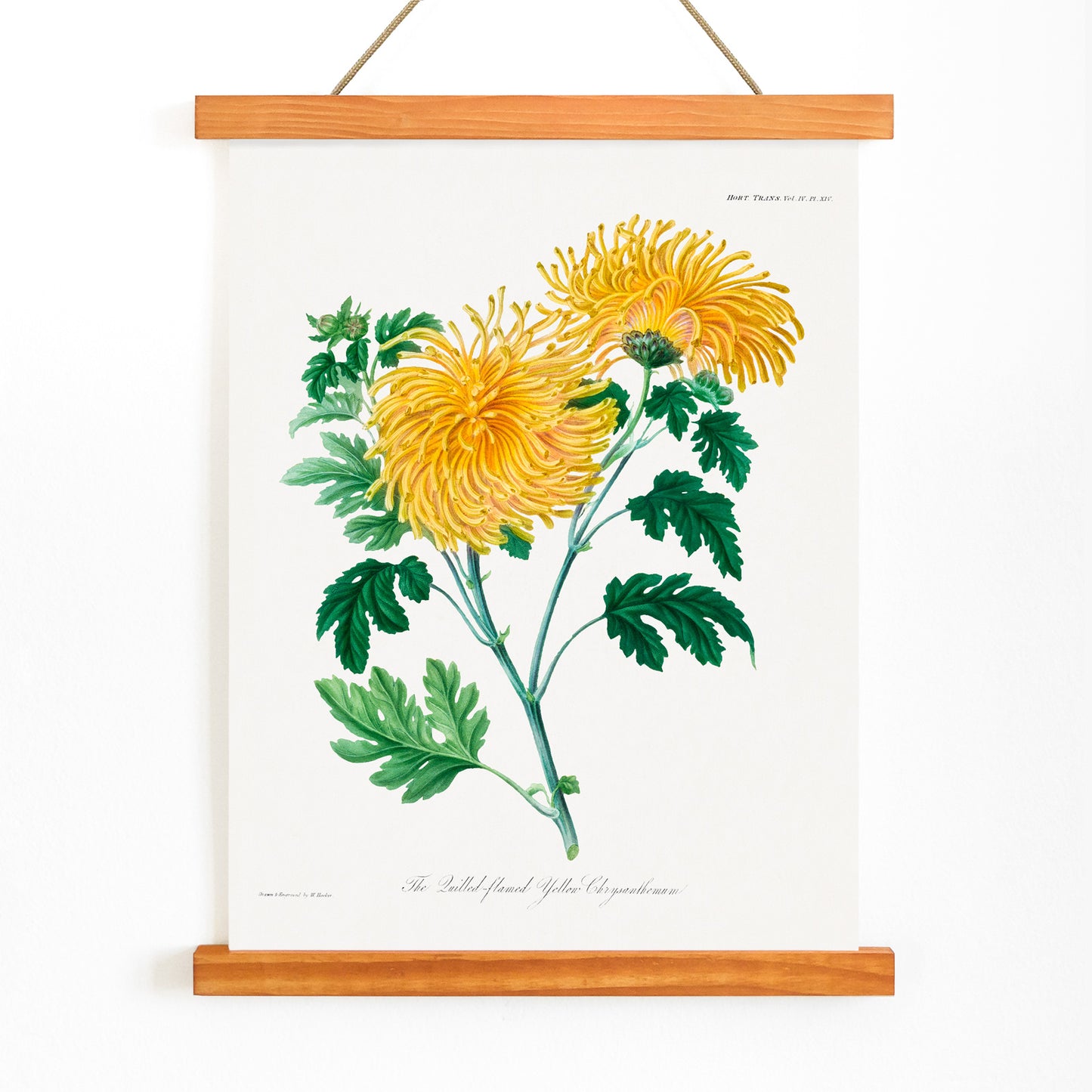
This chrysanthemum print was created during a period when botanical illustration was essential for documenting and sharing plant varieties across Europe. Around 1822, such works served as practical references for gardeners and botanists, supporting the exchange of horticultural knowledge and the growing fascination with exotic blooms.
Chrysanthemums were especially prized for their resilience and late-season color, symbolizing endurance and cheerfulness. This artwork reflects the era’s blend of scientific curiosity and decorative sensibility, making it a historical artifact as well as a timeless piece of botanical art. Discover similar works in our botanical wall art collection.
Style & Characteristics
The print centers on a single chrysanthemum bloom, depicted with precise outlines and delicate shading characteristic of early nineteenth-century botanical studies. The flower’s luminous yellow petals and fresh green leaves are rendered with clarity, set against a light background that enhances the plant’s structure and color.
The overall mood is serene and uplifting, with the composition’s simplicity allowing the natural beauty of the chrysanthemum to stand out. This refined approach is ideal for those who appreciate classic botanical illustration. Explore more sunlit palettes in yellow art prints and complementary green tones.
In Interior Design
This chrysanthemum print brings a touch of botanical elegance to kitchens, entryways, or bedrooms, where its gentle colors and natural motif create a calming atmosphere. Its scientific detail also makes it suitable for home offices, offering a sense of focus and tranquility.
Pair with warm whites, natural woods, and soft linens for a harmonious look, or echo the greens with leafy plants and sage textiles. For a curated gallery wall, combine with other nineteenth-century studies from classic art and finish with simple frames in oak or black for a refined display.