


You may also like
-
The Nodding Renealmia Poster
Philip Reinagle · 1807 · Dramatic renealmia botanical print with poised foliage and refined early nineteenth-century detail
Poster from €9 · Framed from €16
Regular price From €6,00Regular price -
Superb Lily Poster
Philip Reinagle · 1807 · Dramatic lily botanical print with luminous petals and fine botanical detail
Poster from €9 · Framed from €16
Regular price From €6,00Regular price -
The Queen–Plant Poster
Philip Reinagle · 1807 · Romantic botanical print featuring a vivid red Queen-Plant bloom set in a sweeping landscape
Poster from €9 · Framed from €16
Regular price From €6,00Regular price -
The Oblique–Leaved Begonia Poster
Philip Reinagle · 1807 · Elegant botanical print of an oblique-leaved begonia with soft pink and green hues
Poster from €9 · Framed from €16
Regular price From €6,00Regular price


-

"Very nice Posters. The quality is amazing and we received it very quickly !"
-

"A shop to visit absolutely. Huge selection of posters. We spent more than an hour there !"
-

"Perfect to find gift. Price are very good. An they can frame and pack it on site"


About the Artist
Philip Reinagle was a British painter and illustrator active during the late Georgian era, recognized for his meticulous approach to natural subjects. His career spanned portraiture, animal painting, and a significant contribution to botanical illustration, a field that flourished as scientific curiosity and decorative arts converged in the early nineteenth century.
Reinagle’s work for Robert John Thornton’s Temple of Flora project placed him at the forefront of a movement that celebrated exotic plants as emblems of discovery and refinement. These illustrations were intended for collectors eager to display both scientific knowledge and aesthetic taste in their homes.
The Artwork
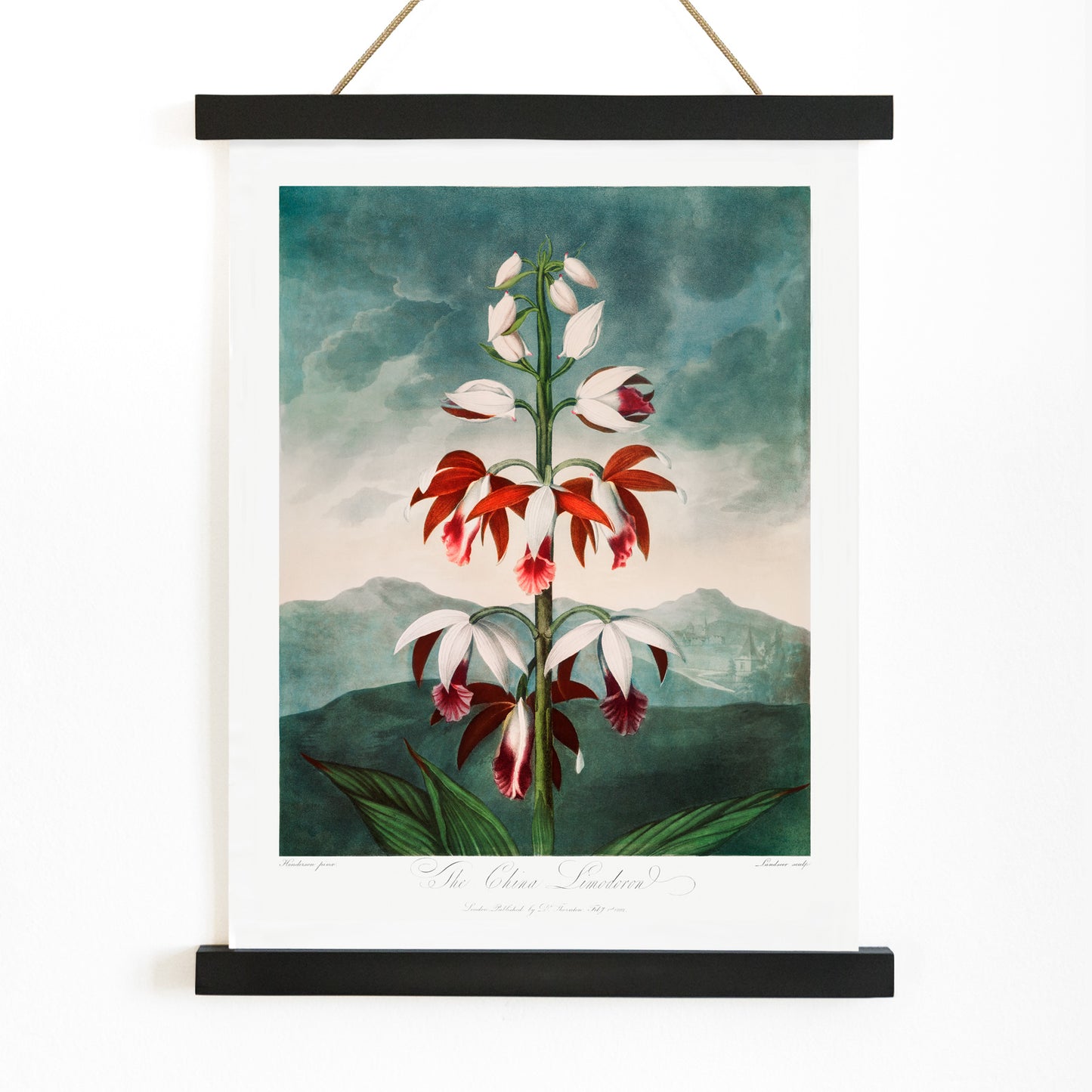
The Chinese Limodoron orchid, featured here, was published in 1807 as part of the Temple of Flora, a landmark botanical series. At a time when rare plants from distant lands were highly prized, this plate served both as a scientific document and a symbol of global exploration. The artwork reflects the era’s fascination with botany, collecting, and the expanding reach of European horticulture.
By capturing the orchid with such care and elegance, Reinagle’s illustration offered viewers a glimpse into the world of early plant hunters and the culture of botanical albums, which helped shape public appreciation for the diversity of nature.
Style & Characteristics
This botanical print presents the orchid as a solitary specimen against a pale, uncluttered background, emphasizing clarity and poise. The plant’s slender green stems and leaves rise gracefully, culminating in delicate blossoms rendered with precise linework and subtle hand coloring, hallmarks of high-quality botanical plates from the period.
The palette is dominated by fresh greens and gentle floral tones, contributing to a serene, contemplative mood. The composition’s simplicity and attention to detail evoke a sense of quiet study, making this print a timeless example of classic botanical art. Discover more in our botanical wall art and green tone prints collections.
In Interior Design
This vintage botanical print lends a refined, tranquil touch to living rooms, bedrooms, studies, or hallways. Its clean presentation complements both contemporary minimalism and traditional interiors, as well as English cottage-inspired decor.
Pair it with soft neutral walls, dark wood accents, or as part of a gallery wall alongside other classic art prints. It appeals to plant enthusiasts, collectors of antique illustration, and anyone seeking a restful vintage accent for their space.