


You may also like
-
Shell Poster
Julie de Graag · 1917 · Striking shell print with bold black curves and rhythmic hatch marks on beige
Poster from €9 · Framed from €16
Regular price From €6,00Regular price -
Twee zilverreigers Poster
Theo van Hoytema · 1892 · Elegant egret print with delicate linework and dramatic black background
Poster from €9 · Framed from €16
Regular price From €6,00Regular price -
Parakeets Poster
Samuel Jessurun de Mesquita · 1927 · Striking parakeets poster in crisp black and white with geometric Art Deco rhythm
Poster from €9 · Framed from €16
Regular price From €6,00Regular price -
Kroonkaketoe Poster
Samuel Jessurun de Mesquita · 1924 · High-contrast cockatoo poster in crisp black-and-white linework with Art Deco poise
Poster from €9 · Framed from €16
Regular price From €6,00Regular price


-

"Very nice Posters. The quality is amazing and we received it very quickly !"
-

"A shop to visit absolutely. Huge selection of posters. We spent more than an hour there !"
-

"Perfect to find gift. Price are very good. An they can frame and pack it on site"


About the Artist
Julie de Graag was a Dutch printmaker and illustrator active in the early twentieth century, admired for expressive woodcuts that reduce nature to clear, memorable forms. Working within the broader decorative spirit of Art Nouveau and modern graphic design, she explored animals and plants with a quiet intensity and strong sense of pattern. Her work is especially prized by collectors interested in early modern European art, and it sits comfortably alongside other famous artists from the period.
De Graag’s approach to printmaking reflects a deep appreciation for the natural world, translating everyday subjects into enduring graphic statements.
The Artwork
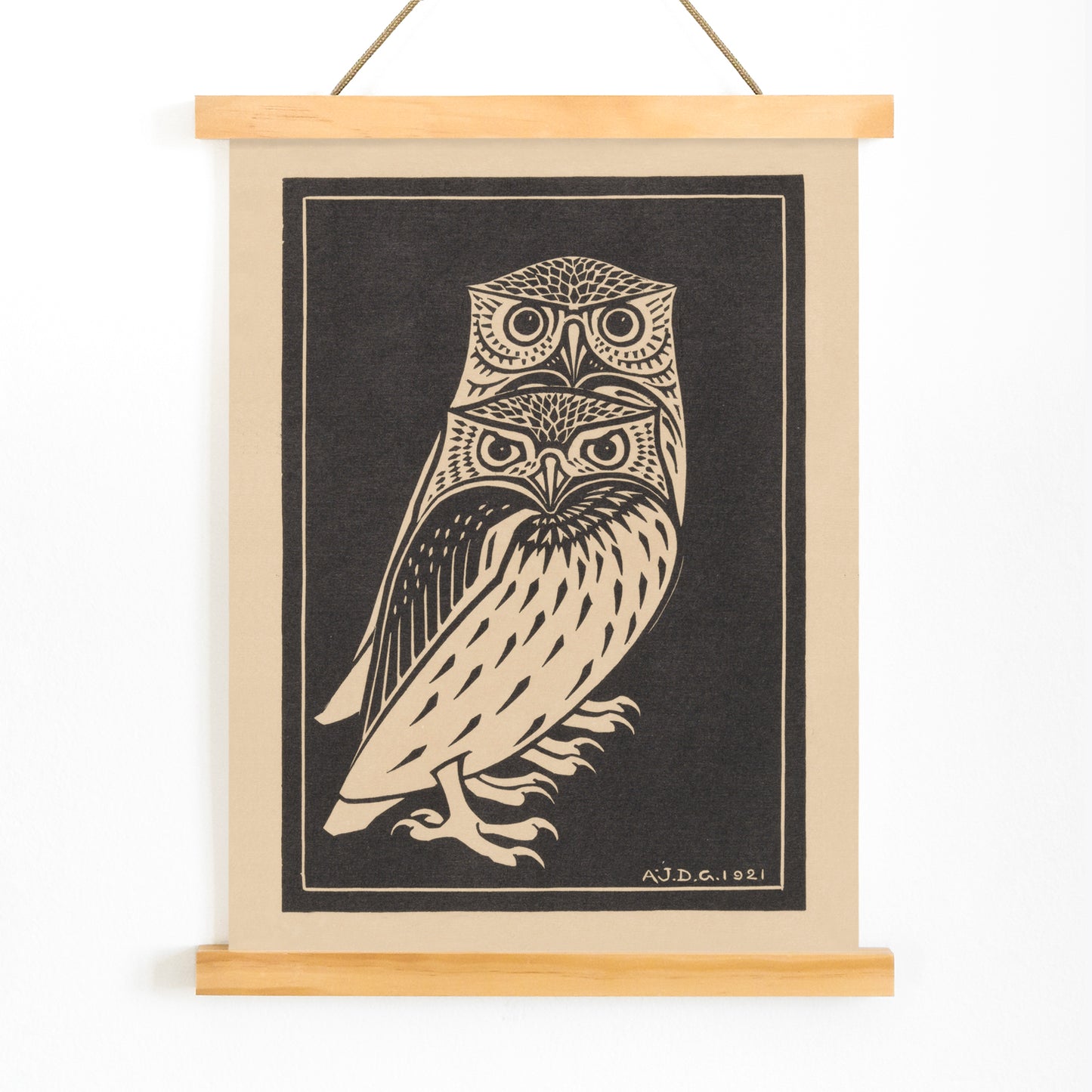
Created in 1913, this image of two owls reflects a fascination with animal symbolism that was prominent in early twentieth-century art. Owls, often associated with wisdom and nocturnal vigilance, were favored by artists seeking to imbue their work with quiet meaning and emotional resonance. At a time when prints became more accessible to a wider audience, such imagery offered viewers a contemplative alternative to grand historical or mythological scenes.
This artwork invites the viewer to pause and reflect, evoking a sense of companionship and stillness that resonates with the era’s interest in nature as a source of inspiration and solace.
Style & Characteristics
The composition relies on the bold contrasts characteristic of woodcut technique. Two owls are depicted side by side in a nearly symmetrical pose, their large, round eyes and patterned feathers rendered in striking black against a pale background. The design is pared down and graphic, with the interplay of inked forms and untouched paper creating a crisp, architectural effect.
This black and white print is marked by its tactile carved texture and subtle sense of mystery, making it appealing to both classic art enthusiasts and admirers of minimalist design. The mood is calm and slightly enigmatic, enhanced by the careful balance of form and negative space.
In Interior Design
This owl wall art is well suited for studies, reading nooks, bedrooms, or hallways, where its quiet presence can offer a thoughtful focal point. It pairs beautifully with natural materials like wood, linen, and ceramics, or can provide a graphic accent in modern interiors with clean lines.
Its versatility allows it to complement Scandinavian, Japandi, or eclectic spaces, and it combines effortlessly with animal wall art or botanical prints. A slim black frame and off-white matting enhance its gallery-like appeal.