


You may also like
-
Peacock And Peacock Butterfly Poster
Archibald Thorburn · 1899 · Naturalistic peacock and butterfly print balancing jewel tones with quiet Victorian poise
Poster from €9 · Framed from €16
Regular price From €6,00Regular price -
Peacock Poster
Ohara Koson · 1910 · Elegant white peacock art print with fanned plumage set against calm green ground
Poster from €9 · Framed from €16
Regular price From €6,00Regular price -
Peonies and Canary Poster
Katsushika Hokusai · 1834 · Delicate canary and peonies art print with crisp ukiyo-e linework
Poster from €9 · Framed from €16
Regular price From €6,00Regular price -
Golden Pheasant in the Snow Poster
Ito Jakuchu · 1900 · Radiant golden pheasant poster set against crisp snow and airy negative space
Poster from €9 · Framed from €16
Regular price From €6,00Regular price


-

"Very nice Posters. The quality is amazing and we received it very quickly !"
-

"A shop to visit absolutely. Huge selection of posters. We spent more than an hour there !"
-

"Perfect to find gift. Price are very good. An they can frame and pack it on site"


About the Artist
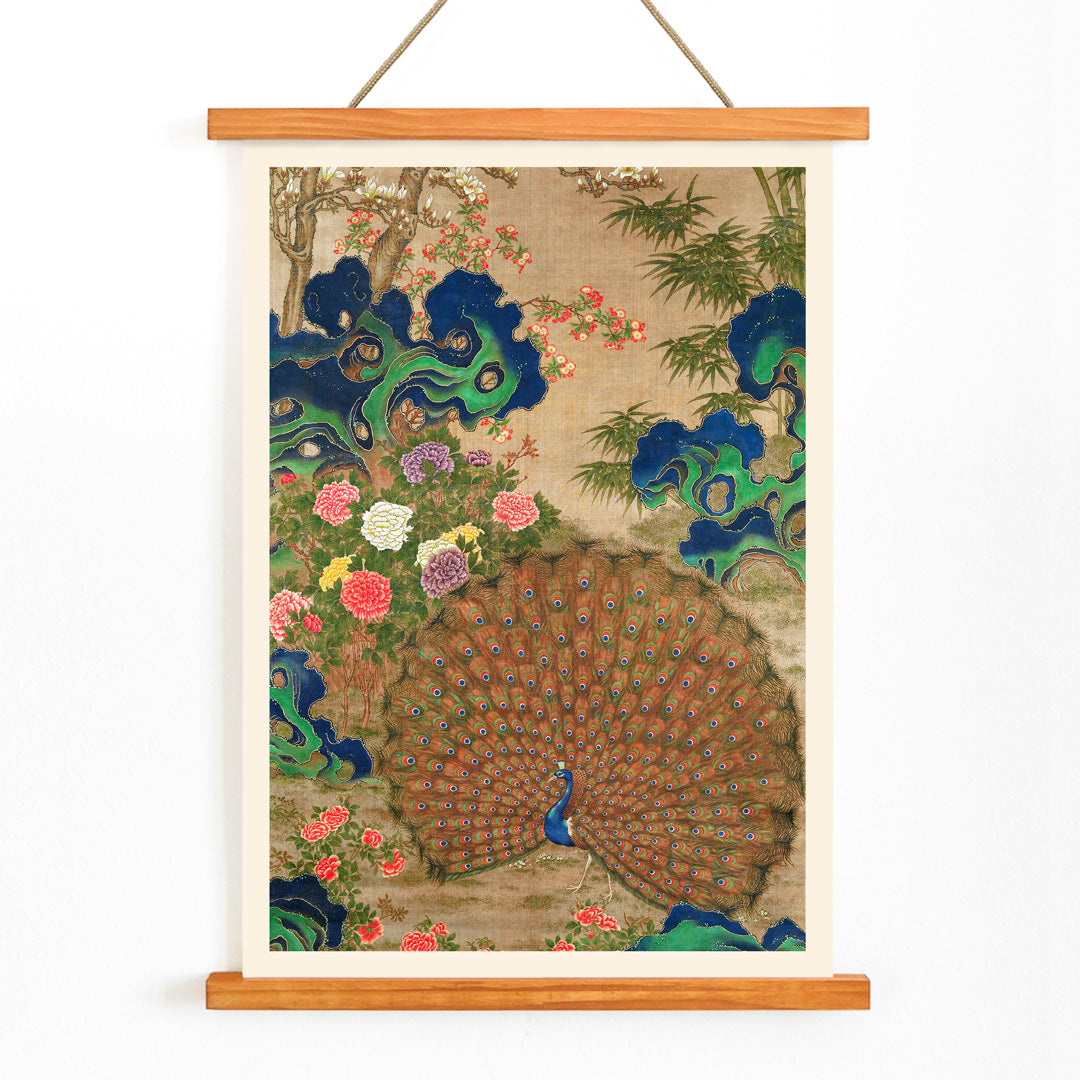
Created by an anonymous artist, this 1650 work is rooted in the Chinese bird-and-flower painting tradition, a genre celebrated for its blend of natural observation and symbolic meaning. These paintings were often produced for the imperial court or scholarly patrons, reflecting a refined appreciation for nature and auspicious motifs.
The anonymity of the artist suggests a workshop or academic setting, where mastery of brushwork and emblematic subjects was highly valued. For more art in this tradition, explore our oriental wall art collection of vintage-inspired prints.
The Artwork
Peacocks in Chinese art symbolize beauty, dignity, and prosperity, making them popular subjects for works intended to convey blessings and good fortune. Bird-and-flower paintings like this one were often exchanged as gifts or displayed during significant occasions to invoke harmony and positive energy in the home.
The inclusion of blossoming plants and scholar rocks adds further layers of meaning, representing resilience, cultivated taste, and the joys of a harmonious garden. This artwork reflects the cultural values and aesthetic ideals of 17th-century China, where such images played a role in both daily life and ceremonial contexts.
Style & Characteristics
The composition features a stately peacock with an elongated, patterned tail, surrounded by delicate blossoms and distinctive scholar rocks on a pale background. The color palette is dominated by deep blues and greens, complemented by earthy browns and highlighted with touches of red and yellow.
Meticulous outlines and detailed feather work lend the image a crisp, decorative quality, while the spacious background imparts a sense of calm and openness. The overall effect is both intimate and formal, capturing the balance of precision and lyricism characteristic of classic Chinese painting. For more animal-themed works, browse our animal prints or pair with botanical prints for a curated display.
In Interior Design
This refined animal wall art is well suited to entryways, living rooms, or bedrooms where a serene focal point is desired. It pairs beautifully with natural materials like wood, linen, and rattan, and can also enhance spaces with black lacquer or minimalist accents for a gallery-inspired look.
Echo the artwork’s deep blue, green, and warm brown tones in textiles or accessories, while keeping surrounding walls in light, neutral shades. This piece also integrates seamlessly into a gallery wall arrangement, especially when combined with other animal or botanical prints for a layered, collected aesthetic.