


You may also like
-
Vertigo Poster
Saul Bass · 1958 · Hypnotic spiral movie poster with stark figures that channel pure psychological suspense
Poster from €9 · Framed from €16
Regular price From €6,00Regular price -
The Cardinal Poster
Saul Bass · 1963 · Minimalist movie poster with bold red and black forms and striking modernist composition
Poster from €9 · Framed from €16
Regular price From €6,00Regular price -
The man with the golden arm Poster
Saul Bass · 1955 · Iconic movie poster featuring a jagged white arm motif with bold modernist typography
Poster from €9 · Framed from €16
Regular price From €6,00Regular price -
Saint Joan Poster
Saul Bass · 1957 · Iconic Saint Joan movie poster with bold red blocks and a solitary figure
Poster from €9 · Framed from €16
Regular price From €6,00Regular price


-

"Very nice Posters. The quality is amazing and we received it very quickly !"
-

"A shop to visit absolutely. Huge selection of posters. We spent more than an hour there !"
-

"Perfect to find gift. Price are very good. An they can frame and pack it on site"


About the Artist
Saul Bass was an influential American graphic designer renowned for revolutionizing film posters and title sequences in the mid-twentieth century. His innovative visual language distilled complex stories into instantly recognizable symbols, leaving a lasting mark on both cinema and modern design.
Bass’s work bridged the worlds of advertising and fine art, elevating the movie poster from mere promotion to a form of visual authorship. His legacy continues to inspire collectors and designers, especially those interested in the evolution of movie posters and the history of graphic storytelling.
The Artwork
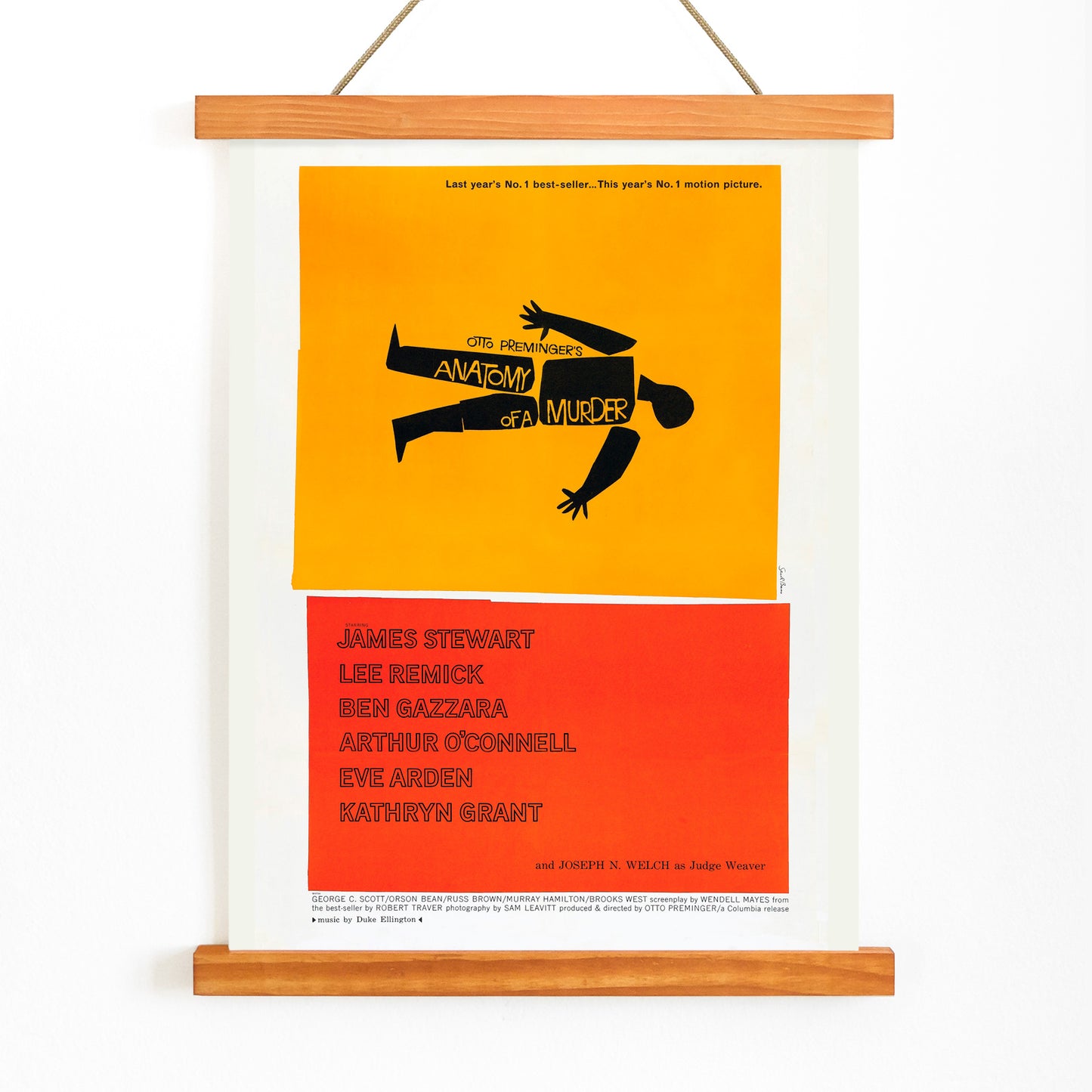
Created in 1959 for the film Anatomy of a Murder, this poster captures the psychological tension and ambiguity at the heart of the courtroom drama. Bass was commissioned to create a striking image that would intrigue audiences and communicate the film’s themes of dissection and moral complexity in a single glance.
The poster became an icon of mid-century design, reflecting a cultural fascination with crime, evidence, and the human psyche. Today, it stands as a touchstone for those interested in minimalist design prints and the intersection of cinema and visual art.
Style & Characteristics
The design features a fragmented black silhouette of a human body, arranged like cut paper against a vivid orange background. The jagged, irregular edges and bold negative space evoke a sense of tension and unease, mirroring the film’s themes of fractured truth and legal ambiguity.
High-contrast colors—primarily orange, black, and white—ensure the poster’s immediate visual impact. The rough, hand-rendered typography reinforces the raw, urgent mood. This minimalist approach aligns naturally with other orange tone posters and modernist graphic art.
In Interior Design
This Saul Bass poster serves as a dramatic focal point in contemporary interiors, especially in living rooms, home offices, or media spaces. Its striking palette and graphic clarity complement modern, industrial, and Scandinavian styles, providing a bold accent amid clean lines and neutral tones.
Pairing it with white walls, dark woods, or charcoal textiles allows the orange and black to stand out. For a cohesive gallery wall, combine it with other vintage prints or minimalist artworks to celebrate the enduring appeal of classic graphic design.